
Goa Gajah (Elephant Cave)

A Historic Archaeological Wonder in Bali

Goa Gajah, widely known as the Elephant Cave, is a significant archaeological site located in Bedulu Village, just outside of Ubud. Dating back to the 11th century, this site served as a spiritual sanctuary for meditation and prayer. This site is widely recognized as one of the most essential Bali tourist attractions for history enthusiasts and also spiritual travelers. The complex features a mysterious cave, ancient bathing pools, and also beautiful garden landscapes. Furthermore, the site showcases a unique historical blend of Hindu and Buddhist influences. Therefore, it is a “must-visit” for anyone exploring Bali’s rich cultural heritage. You will feel the ancient energy at Goa Gajah.

Etymology of Goa Gajah

The name Goa Gajah translates literally to “Elephant Cave,” but its origin is not related to real animals. One theory suggests the name comes from the Petanu River, which was once known as the Lwa Gajah (Elephant River). Another theory points to the large stone figure inside the cave that resembles the Hindu elephant-headed God, Ganesha. Furthermore, ancient inscriptions found at the site mention the word Kunjarakunjapada, which means “the place of the elephant.” Consequently, the name has become an iconic part of Balinese history.
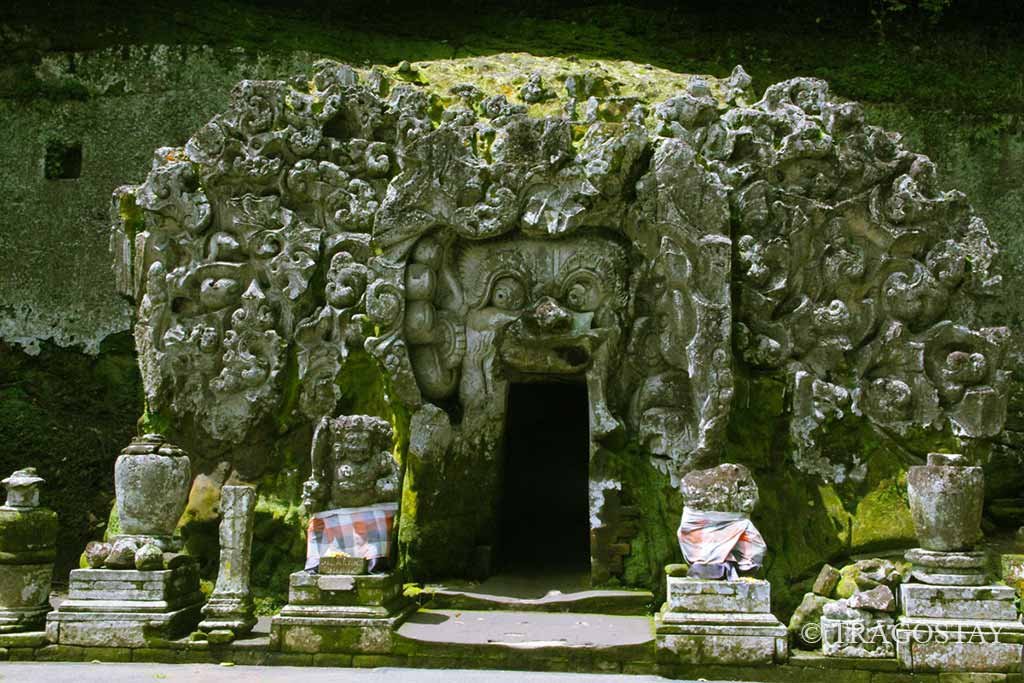
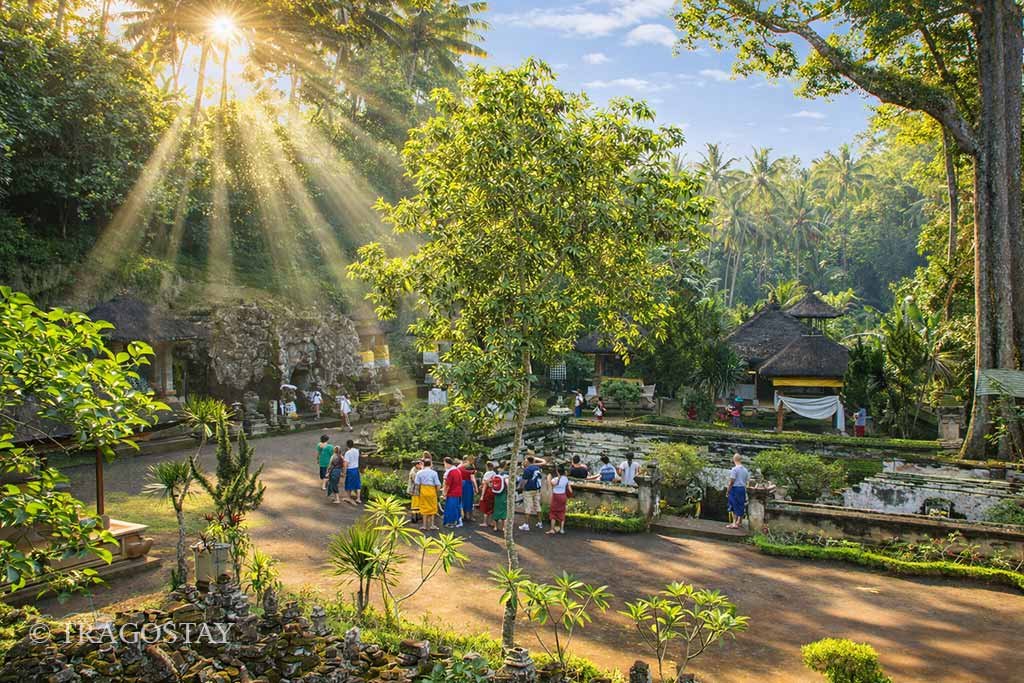
Intricate stone carving details of Goa Gajah Temple Bali Elephant Cave.

Visitors Need To Know

Highlight:

  • 11th-Century Archaeological and Spiritual Site
  • Iconic Giant Face Carving at the Entrance
  • Historical Blend Hindu and Buddhist Symbols
  • Sacred Bathing Pools with Nymph Statues
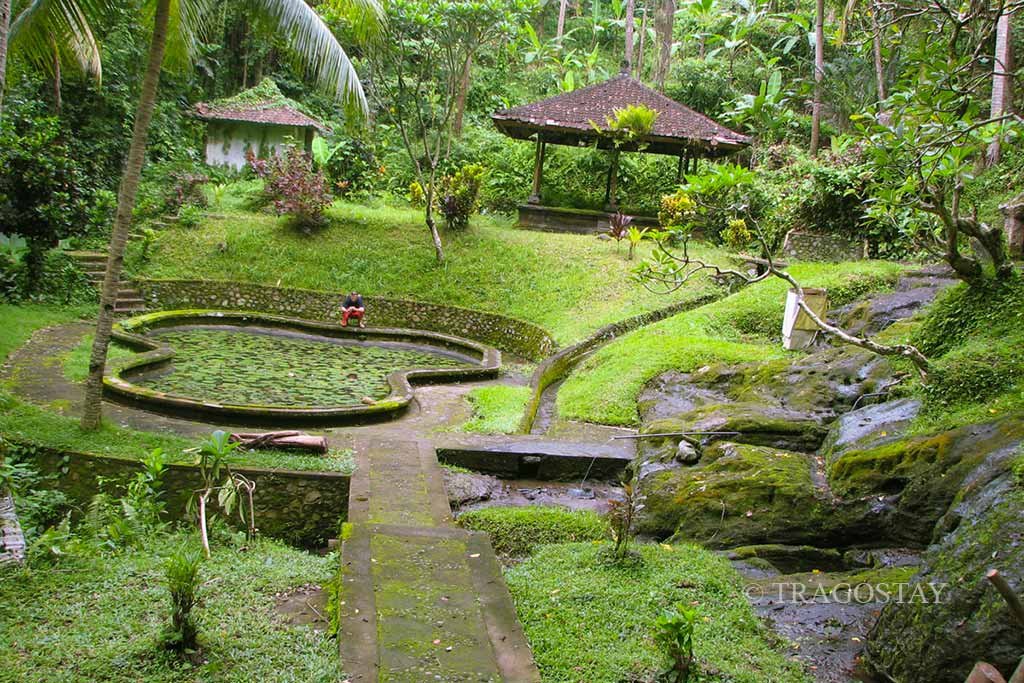
  • Peaceful Valley Garden with Lily Ponds
  • Strategic Location near Ubud Cultural Hubs

History and Origins

The origins of Goa Gajah reflect the deep spiritual history of the island during the Warmadewa Dynasty.

A Blend of Two Faiths

One of the most fascinating aspects of Goa Gajah is the presence of both Hindu and Buddhist symbols. Inside the cave, you can find a statue of Ganesha and also three stone lingams representing the Hindu God Shiva. Meanwhile, near the valley stream, there are ancient ruins of Buddhist stupas and also stone reliefs. Consequently, this site proves that different spiritual traditions coexisted peacefully in ancient Bali.

The Rediscovery

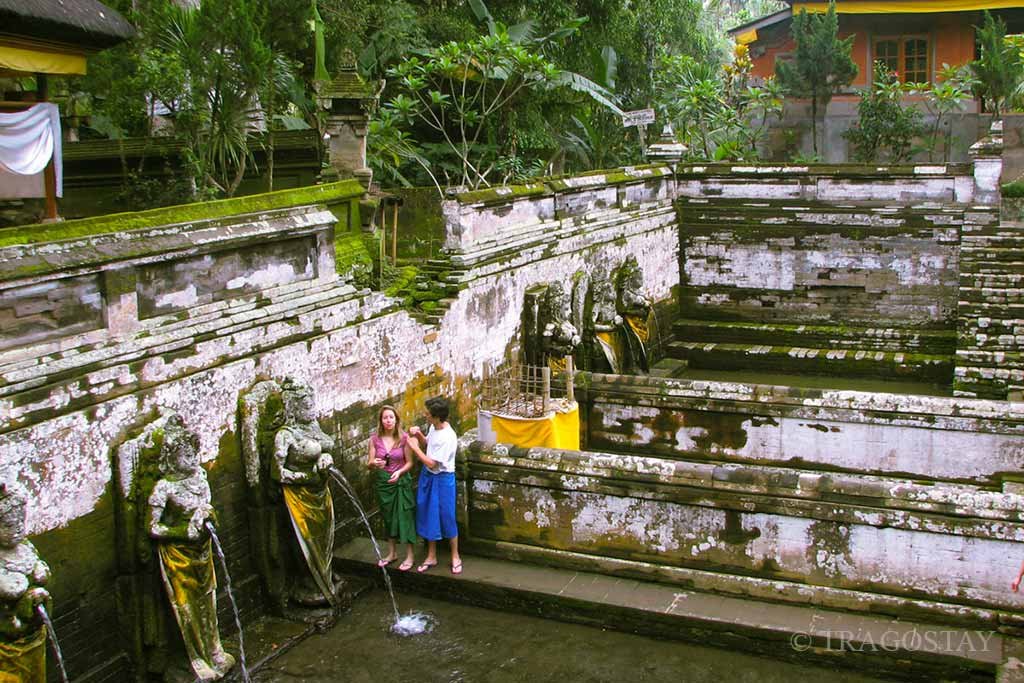
Although the site is ancient, it was rediscovered by Dutch archaeologists in 1923. The sacred bathing pools were not excavated until much later in 1954. These pools were once used for ritual purification before entering the cave for meditation. Today, the site is carefully preserved as a national cultural heritage.

The architecture of Goa Gajah is a marvel of ancient Balinese stone-carving and also engineering.

The Cave Structure

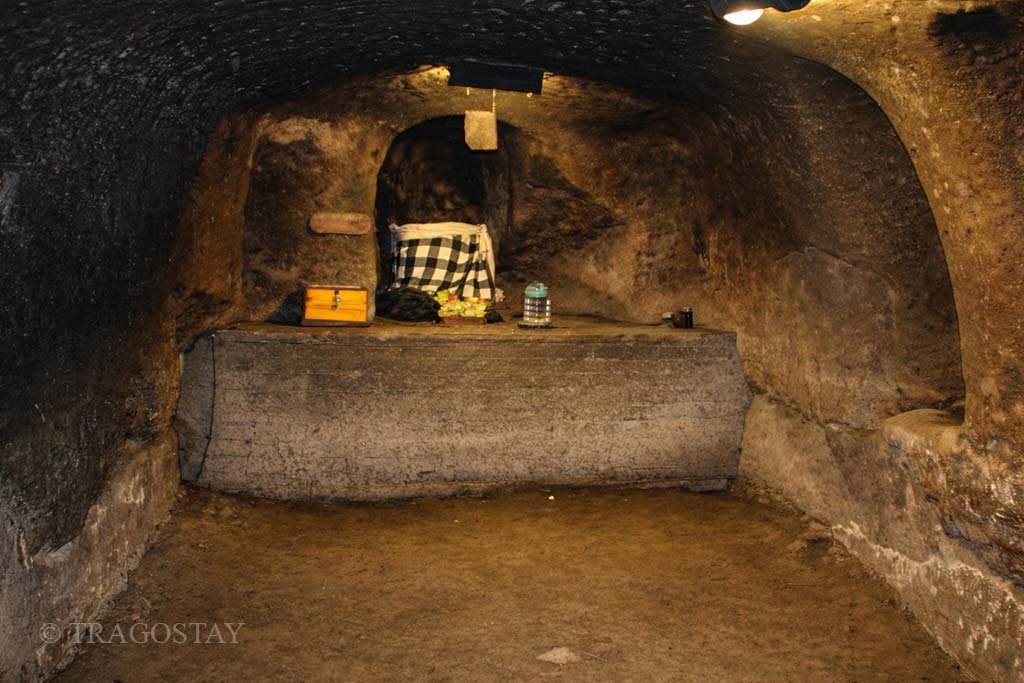
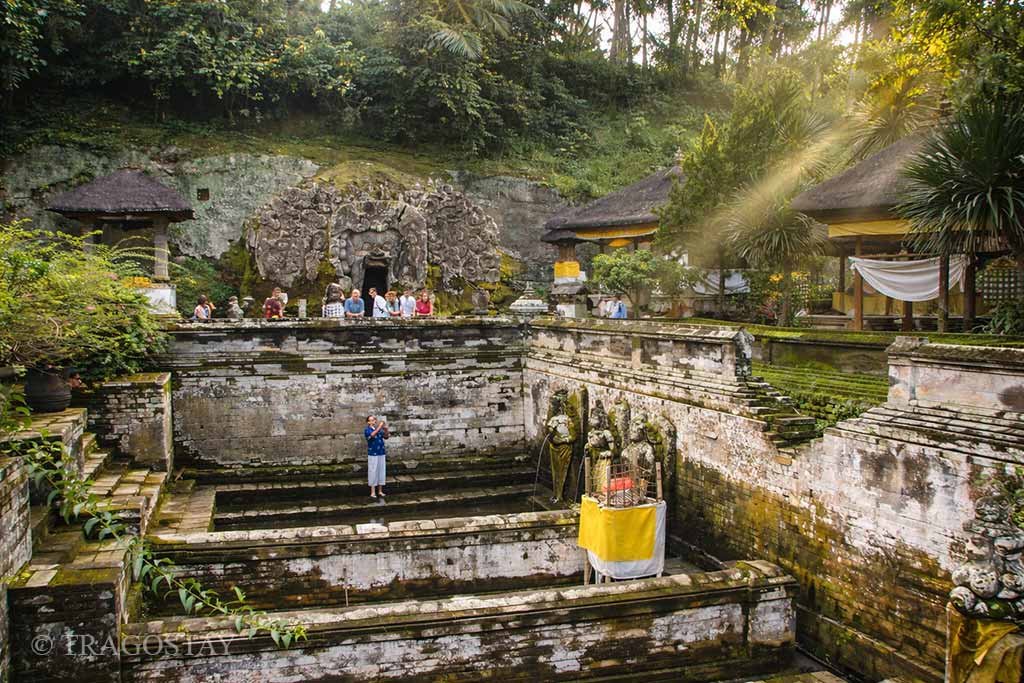
The cave is manually carved into a solid rock face in a “T” shape. The entrance is adorned with a massive, menacing face, often believed to be the demon Kala or the earth-spirit Bhoma. These carvings are intended to protect the sanctity of the cave from evil influences. Inside, the narrow hallways contain small niches used for sitting in silence. Furthermore, the interior houses a statue of Ganesha and also three stone lingams (symbols of Shiva).

The Petirtaan Bathing Pools

In front of the cave lies a grand rectangular bathing pool divided into two sections. It features six (originally seven) beautiful statues of nymphs, known as Widyadara-Widyadari, holding water spouts. These statues represent the holy rivers of India and also symbolize spiritual purification. The water flows from these spouts into the pools, creating a serene and also sacred atmosphere. Therefore, the structural layout represents a perfect balance between the mountain (cave) and also the water (pools).

Archaeological Forms and Structure

What to Do at Goa Gajah

  • Explore the Dark Cave: Step inside the ancient cave to see the historic statues and also feel the cool atmosphere.
  • Walk Down to the Valley: Follow the stairs down to the lily ponds and also see the fallen ancient reliefs.
  • Experience Spiritual Serenity: Enjoy the peaceful sound of flowing water and also the lush greenery surrounding the site.
  • Photography: Capture the dramatic entrance of the cave which is one of the most photographed spots in Bali.

Functions of Goa Gajah

Throughout history, Goa Gajah has served several vital roles for the Balinese people.

  • Center for Meditation: The quiet, dark chambers inside the cave were designed for monks and also priests to achieve deep spiritual focus.
  • Place of Ritual Purification: The Petirtaan pools served as a site for cleansing the soul before performing holy ceremonies.
  • Symbol of Religious Harmony: As a site containing both Hindu and also Buddhist artifacts, it served as a bridge between two major faiths.
  • Water Management Site: The sophisticated drainage and also spring management helped maintain the local ecosystem in the Petanu River valley.
  • Cultural Heritage Site: Today, it functions as a living museum where the world can learn about the Majapahit and also Warmadewa eras.

Best Time to Visit Goa Gajah

To fully appreciate the spiritual atmosphere and also avoid the heat, timing your visit is essential.

  • Early Morning (8:00 AM – 9:00 AM): This is the absolute best time to visit because the air is still cool and also the large tour buses have not yet arrived.
  • Late Afternoon (4:00 PM – 5:00 PM): Visiting during the “golden hour” provides beautiful lighting for photography and also a quieter environment as most tourists head back to their hotels.
  • Dry Season (April to October): Visiting during these months is ideal because the stone steps leading down to the valley can become very slippery and also muddy during the rainy season.
  • During Local Festivals: If you are lucky enough to visit during a temple anniversary (Odalan), you can see the site decorated with traditional Balinese ornaments and also witness local ceremonies.

Nearby Bali Tourist Attractions to Visit

  • Ubud Monkey Forest: A famous sanctuary for long-tailed macaques and also ancient jungle temples.
  • Tegalalang Rice Terrace: Iconic emerald-green paddies featuring the traditional Subak irrigation system.
  • Puri Saren Ubud: The historic Royal Palace where you can watch traditional Balinese dance performances.
  • Ubud Market: The best place to find local art, textiles, and also unique Balinese souvenirs.
  • Mas Village: A world-renowned center for master woodcarvers and also artistic wood galleries.
  • Gunung Kawi: A majestic 11th-century temple complex featuring shrines carved directly into the cliff face.

Frequently Asked Questions (FAQ) about Goa Gajah

How much is the admission for Goa Gajah?

Ticket prices may change periodically so please check the latest rates at the entrance gate before entering. The admission fee usually includes the loan of a traditional sarong for your visit.
There are no real elephants here. The name refers to the ancient river or also the statue of Ganesha.
Yes, you must wear a sarong and also a sash. This shows respect for the sacred nature of the temple.
Most visitors spend about 45 to 60 minutes. This is enough time to explore the cave and also the garden.
The main cave is easy to reach. However, the lower valley has many steep and also slippery stone stairs.
Yes, photography is allowed here. Please avoid using flash to preserve the stone and also show respect to others.
Search

April 2026

  • M
  • T
  • W
  • T
  • F
  • S
  • S
  • 1
  • 2
  • 3
  • 4
  • 5
  • 6
  • 7
  • 8
  • 9
  • 10
  • 11
  • 12
  • 13
  • 14
  • 15
  • 16
  • 17
  • 18
  • 19
  • 20
  • 21
  • 22
  • 23
  • 24
  • 25
  • 26
  • 27
  • 28
  • 29
  • 30

May 2026

  • M
  • T
  • W
  • T
  • F
  • S
  • S
  • 1
  • 2
  • 3
  • 4
  • 5
  • 6
  • 7
  • 8
  • 9
  • 10
  • 11
  • 12
  • 13
  • 14
  • 15
  • 16
  • 17
  • 18
  • 19
  • 20
  • 21
  • 22
  • 23
  • 24
  • 25
  • 26
  • 27
  • 28
  • 29
  • 30
  • 31
0 Adults
0 Children
Pets
Size
Price
Amenities
Facilities

Compare listings

Compare

Compare experiences

Compare

Compare listings

Compare

Compare experiences

Compare
Search

April 2026

  • M
  • T
  • W
  • T
  • F
  • S
  • S
  • 1
  • 2
  • 3
  • 4
  • 5
  • 6
  • 7
  • 8
  • 9
  • 10
  • 11
  • 12
  • 13
  • 14
  • 15
  • 16
  • 17
  • 18
  • 19
  • 20
  • 21
  • 22
  • 23
  • 24
  • 25
  • 26
  • 27
  • 28
  • 29
  • 30

May 2026

  • M
  • T
  • W
  • T
  • F
  • S
  • S
  • 1
  • 2
  • 3
  • 4
  • 5
  • 6
  • 7
  • 8
  • 9
  • 10
  • 11
  • 12
  • 13
  • 14
  • 15
  • 16
  • 17
  • 18
  • 19
  • 20
  • 21
  • 22
  • 23
  • 24
  • 25
  • 26
  • 27
  • 28
  • 29
  • 30
  • 31
0 Adults
0 Children
Pets
Size
Price
Amenities
Facilities