

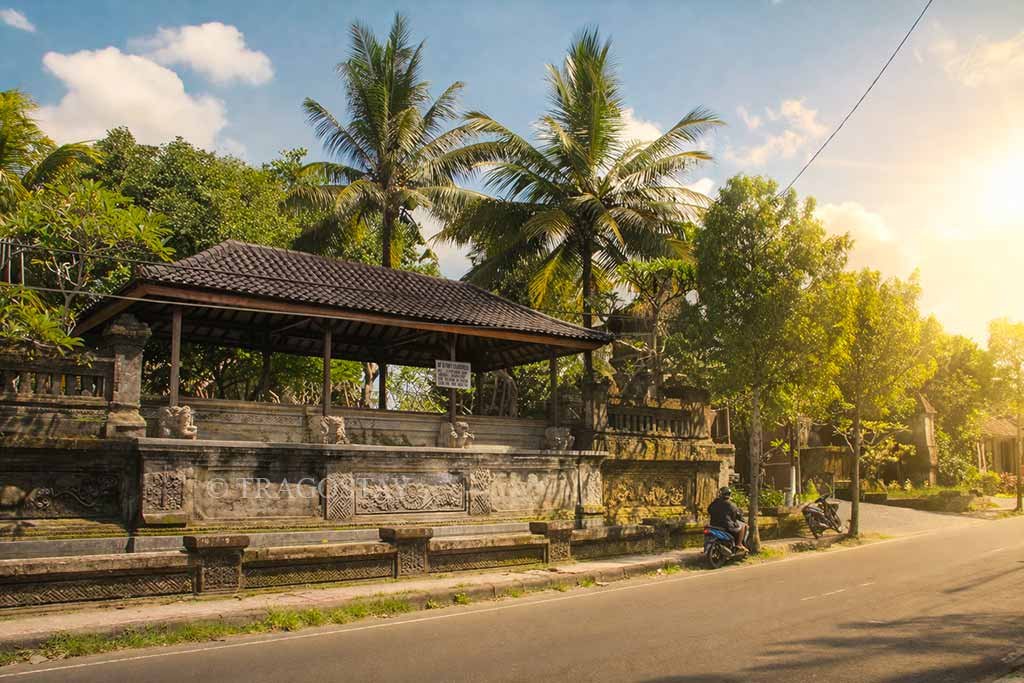
Mas Village stands as the global epicenter for anyone seeking the most profound and intricate Balinese woodcarving traditions during their island exploration. Located strategically just south of Ubud in the Gianyar Regency, this village has earned an international reputation for its master carvers. Travelers often stop here to admire how local artisans transform raw blocks of wood into lifelike statues and sacred masks. Consequently, the village serves as a vital cultural artery for Bali’s artistic identity. Visitors will find a majestic atmosphere where spirituality meets high-end craftsmanship along the main thoroughfares.
Moreover, the proximity to other major landmarks makes it an essential stop for any cultural enthusiast. While you drive through the village, the towering wooden sculptures guarding the gallery entrances will certainly impress you. Indeed, this village represents the pinnacle of Balinese sculptural excellence.
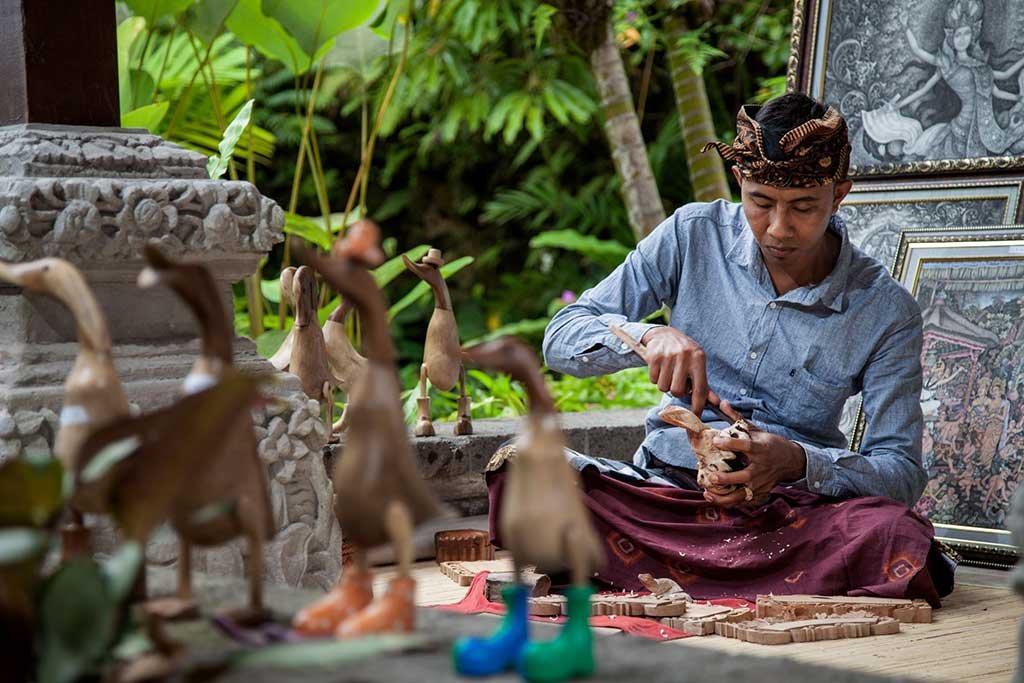
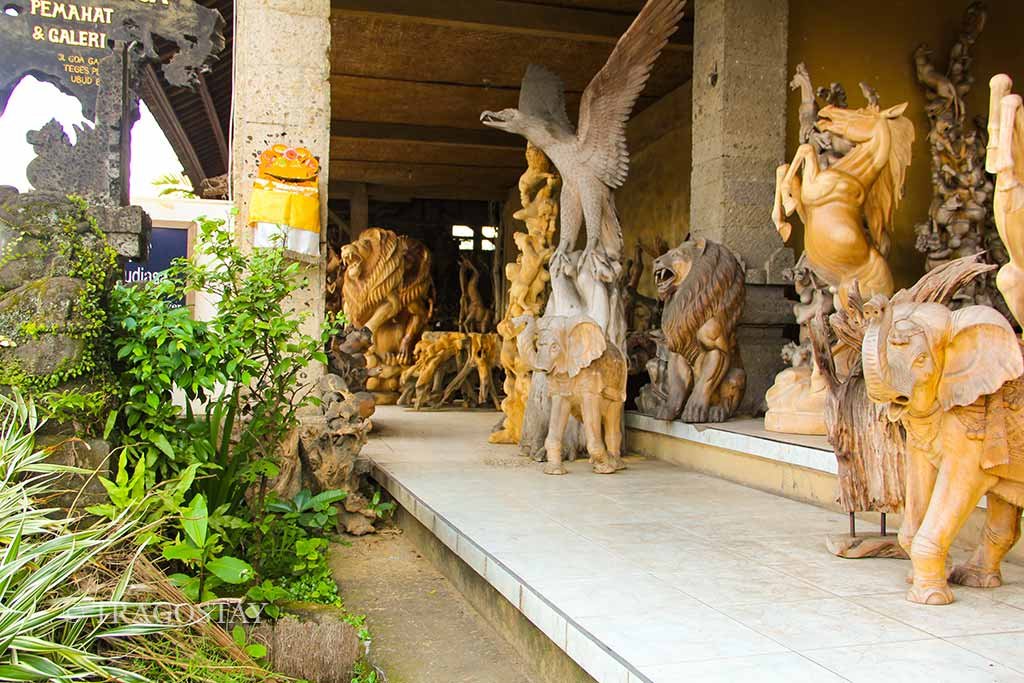
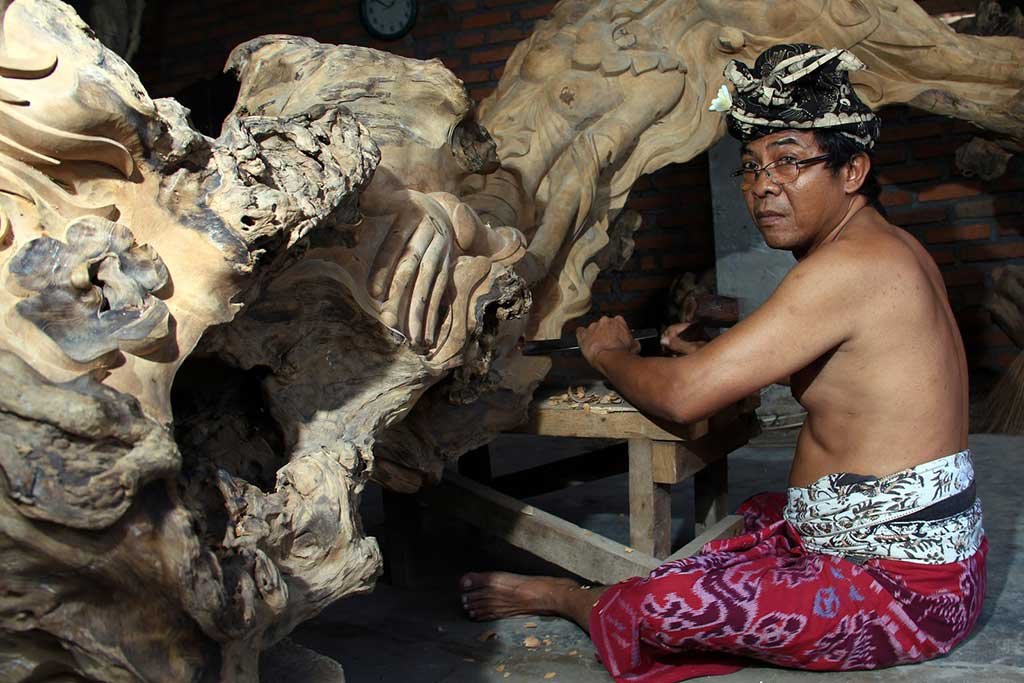
Walking through the village feels like entering a living museum dedicated to the earth’s natural beauty. Massive showrooms display grand statues of deities and mythical creatures behind elegant glass facades. Nevertheless, the true magic of the village happens in the shaded porches of local family compounds. Here, the rhythmic tapping of chisels creates a meditative atmosphere that defines the daily life of the residents. You will quickly notice that Mas focuses on a more “humanistic” and naturalistic style compared to other carving centers. Some artisans specialize in the smooth, elongated forms of modern art, while others maintain the rugged detail of traditional temple ornaments. Because of this artistic range, every collector finds a masterpiece that resonates with their soul.
Furthermore, the carvers often explain the philosophy behind their work if you engage with them. Therefore, your visit becomes a deep educational journey into Balinese Hinduism.
Exploring the central hub of Balinese woodcraft offers a fascinating look into the island’s spiritual devotion. For many centuries, Mas has functioned as the primary source of sacred carvings for royal palaces and village temples. Although Bali features various craft villages, none possess the specific prestige and historical weight of this woodcarving center. Artisans here utilize high-quality timber like Suar, Ebony, and fragrant Sandalwood, ensuring that every piece lasts for generations. Consequently, the village has become a benchmark for quality in the international art world.
Interestingly, the village layout allows for a very organized and pleasant touring experience. You can easily spend several hours wandering from one legendary workshop to the next. Most gallery owners welcome visitors with professional courtesy, often providing detailed explanations of the wood types used. Furthermore, the prices here reflect the immense labor and years of training required to master the craft. Since you are purchasing directly from the master’s studio, you receive an authentic piece with a clear lineage. This direct connection between the creator and the patron adds significant value to your investment. A
dditionally, you support the preservation of ancient techniques by patronizing these local maestros. Thus, your purchase helps keep a dying art form alive in the modern age.
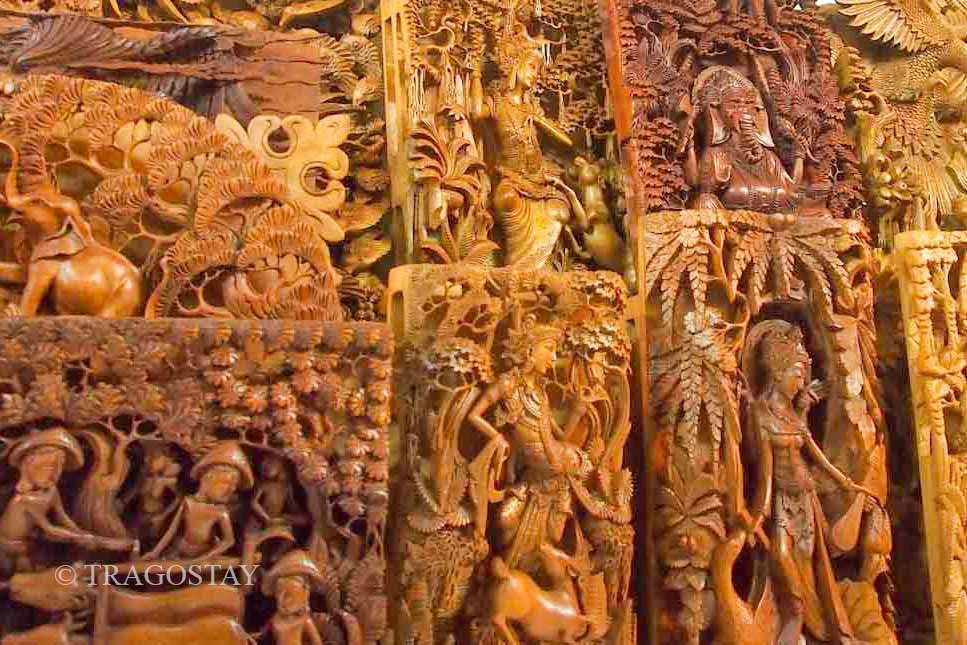
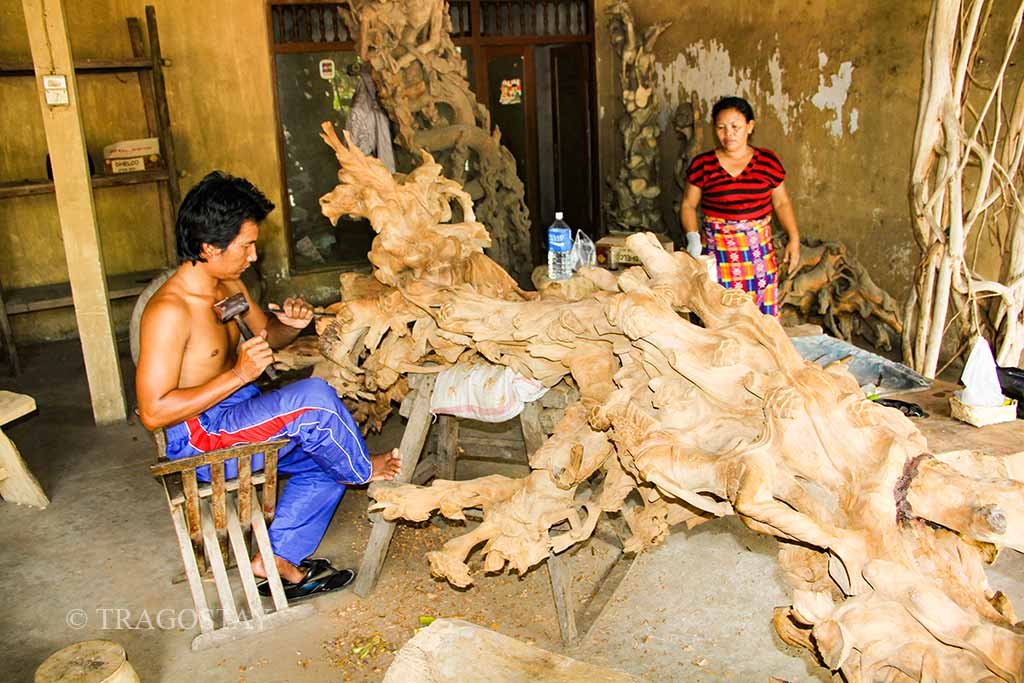
The history of this creative community is deeply intertwined with the arrival of high priests and royal influences in Bali. Historically, the carvers of Mas belonged to the Brahmin and Pande castes, who were responsible for creating ritual objects. They carved the intricate “Prada” (gold leaf) doors for palaces and the “Barong” masks used in exorcism rites. However, the artistic direction changed significantly during the mid-20th century. During this era, legendary masters like Ida Bagus Nyana and his son Ida Bagus Tilem revolutionized the craft.
Consequently, they moved away from purely religious themes toward more experimental and expressive human forms. This shift caught the attention of Western artists and collectors who were living in nearby Ubud. During the 1930s, the village began exporting its unique “elongated” style to Europe, which forever changed the local economy. Despite this global fame, the villagers remain deeply connected to their ancestral duties. You will still see master carvers participating in temple ceremonies, wearing the very masks they created.
This balance between commercial success and spiritual duty defines the character of Mas. Because of this legacy, the village remains the most respected authority on woodcarving in Indonesia. Moreover, the younger generation continues to apprentice under the elders to maintain the “Taksu” or divine inspiration of their work. Therefore, the artistic flame of Mas continues to burn brightly today.
Visitors often want to know how to navigate the vast array of galleries and workshops effectively. Fortunately, the village provides several layers of engagement for different types of travelers.
Visiting the world-renowned galleries is undoubtedly the most popular activity in Mas Village. Many of these showrooms, such as the Tilem Gallery, resemble palaces more than shops. First, you enter through ornate gates into lush gardens filled with monumental carvings. After that, you explore indoor halls where the air smells of sandalwood and polish. Although some pieces cost thousands of dollars, looking at them is entirely free and highly encouraged. Furthermore, you can see how different woods react to light and texture.
Observing the creation of “Topeng” or traditional masks is another highlight you should not miss. Most master carvers have a dedicated area where they work on these spiritual objects. They use special tools to hollow out the wood and create expressive facial features. Because these masks are often used in sacred dances, the carvers must follow specific purification rituals. Additionally, you can learn about the different characters in Balinese mythology, from the wise elders to the mischievous demons.
Planning your visit to Mas Village requires careful timing to get the most out of your interaction with the artisans. Generally, the workshops are most active between 9:00 AM and 5:00 PM.
Arriving mid-morning, around 10:00 AM, is ideal because the carvers have usually finished their morning offerings and are settled into their work. During these hours, the natural light allows you to see the fine details of the carvings clearly. Additionally, visiting on a weekday is better than the weekend if you want a quieter experience. If you visit during the rainy season, you will find the galleries to be a perfect indoor refuge from the tropical showers.
Reaching Mas Village is incredibly convenient because it serves as the gateway to Ubud. If you are staying in central Ubud, the drive takes less than 10 minutes by car or scooter. From the southern coastal areas like Sanur, the journey takes approximately 30 to 40 minutes. Most travelers choose to hire a private driver through Tragostay to ensure a comfortable trip. This option allows you to transport large wooden purchases safely back to your hotel. Alternatively, you can easily find taxis or ride-sharing apps that operate frequently in this area. Regardless of your transport method, the village is well-signposted and impossible to miss.
Log in
Don't have an account? Register
Please enter your username or email address. You will receive a link to create a new password via email.
Register with your email
Do you already have an account? Log In
Log in
Don't have an account? Register
Please enter your username or email address. You will receive a link to create a new password via email.
Register with your email
Do you already have an account? Log In