

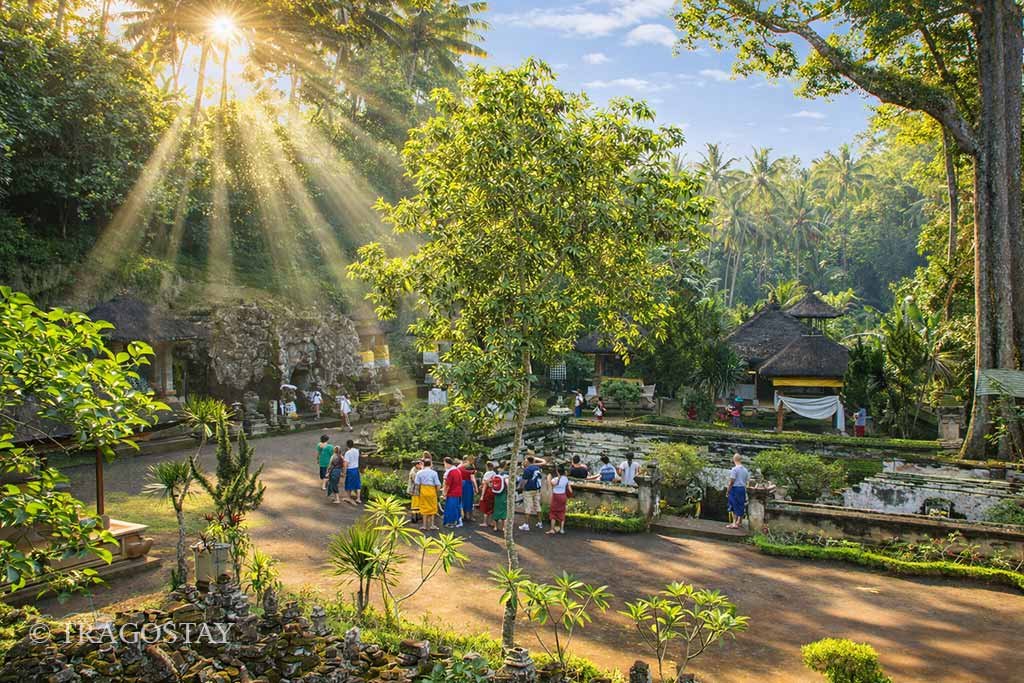
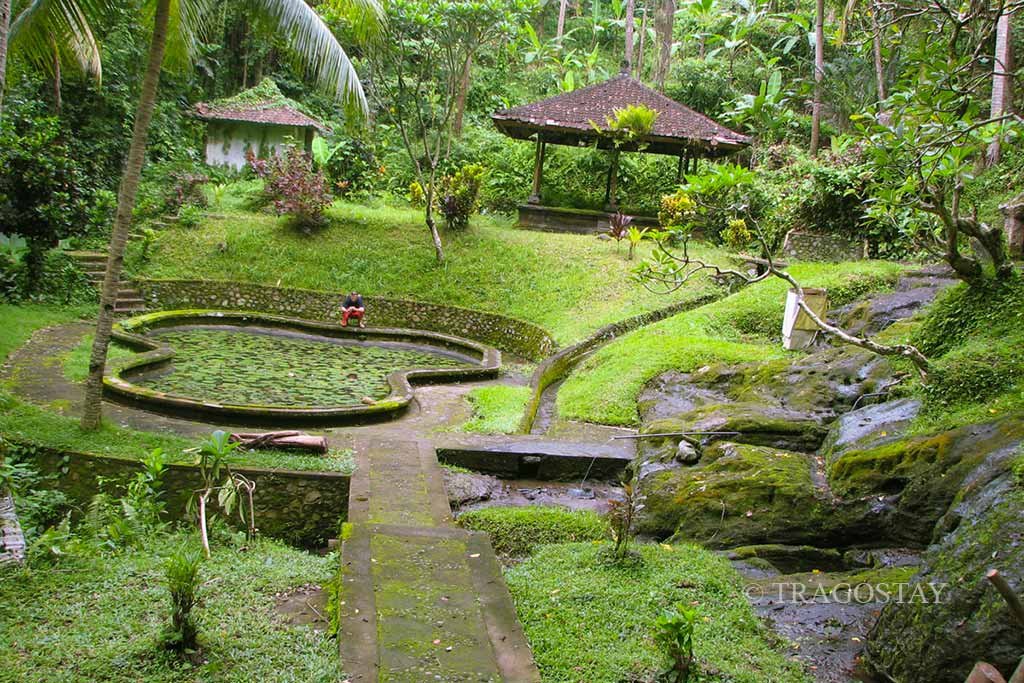
Goa Gajah, widely known as the Elephant Cave, is a significant archaeological site located in Bedulu Village, just outside of Ubud. Dating back to the 11th century, this site served as a spiritual sanctuary for meditation and prayer. This site is widely recognized as one of the most essential Bali tourist attractions for history enthusiasts and also spiritual travelers. The complex features a mysterious cave, ancient bathing pools, and also beautiful garden landscapes. Furthermore, the site showcases a unique historical blend of Hindu and Buddhist influences. Therefore, it is a “must-visit” for anyone exploring Bali’s rich cultural heritage. You will feel the ancient energy at Goa Gajah.
The name Goa Gajah translates literally to “Elephant Cave,” but its origin is not related to real animals. One theory suggests the name comes from the Petanu River, which was once known as the Lwa Gajah (Elephant River). Another theory points to the large stone figure inside the cave that resembles the Hindu elephant-headed God, Ganesha. Furthermore, ancient inscriptions found at the site mention the word Kunjarakunjapada, which means “the place of the elephant.” Consequently, the name has become an iconic part of Balinese history.
The origins of Goa Gajah reflect the deep spiritual history of the island during the Warmadewa Dynasty.
One of the most fascinating aspects of Goa Gajah is the presence of both Hindu and Buddhist symbols. Inside the cave, you can find a statue of Ganesha and also three stone lingams representing the Hindu God Shiva. Meanwhile, near the valley stream, there are ancient ruins of Buddhist stupas and also stone reliefs. Consequently, this site proves that different spiritual traditions coexisted peacefully in ancient Bali.
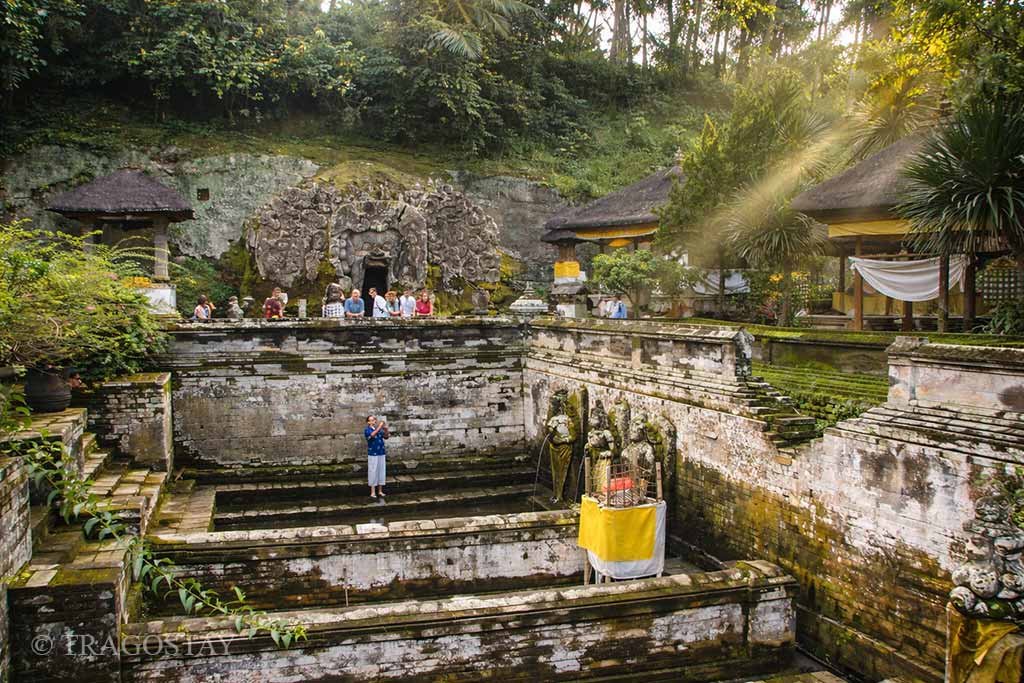
Although the site is ancient, it was rediscovered by Dutch archaeologists in 1923. The sacred bathing pools were not excavated until much later in 1954. These pools were once used for ritual purification before entering the cave for meditation. Today, the site is carefully preserved as a national cultural heritage.
The architecture of Goa Gajah is a marvel of ancient Balinese stone-carving and also engineering.
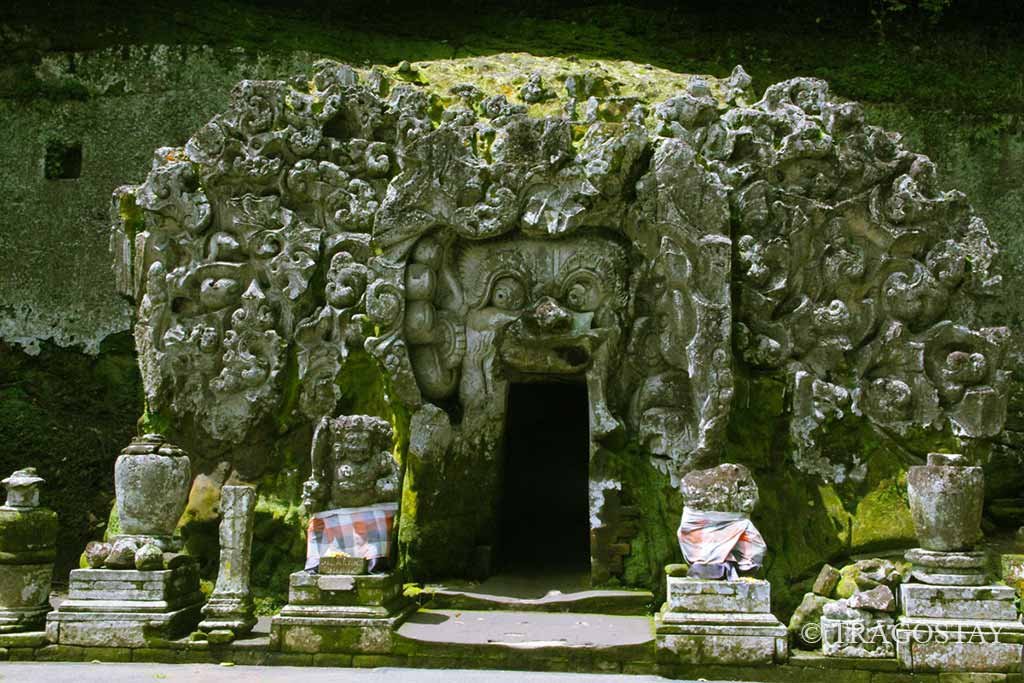
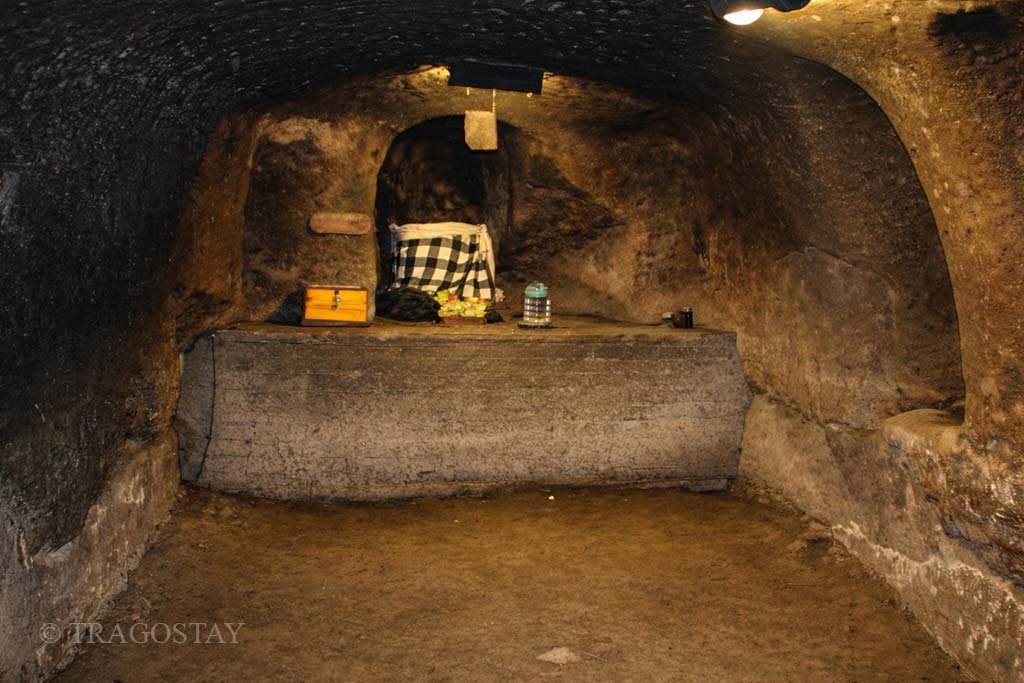
The cave is manually carved into a solid rock face in a “T” shape. The entrance is adorned with a massive, menacing face, often believed to be the demon Kala or the earth-spirit Bhoma. These carvings are intended to protect the sanctity of the cave from evil influences. Inside, the narrow hallways contain small niches used for sitting in silence. Furthermore, the interior houses a statue of Ganesha and also three stone lingams (symbols of Shiva).
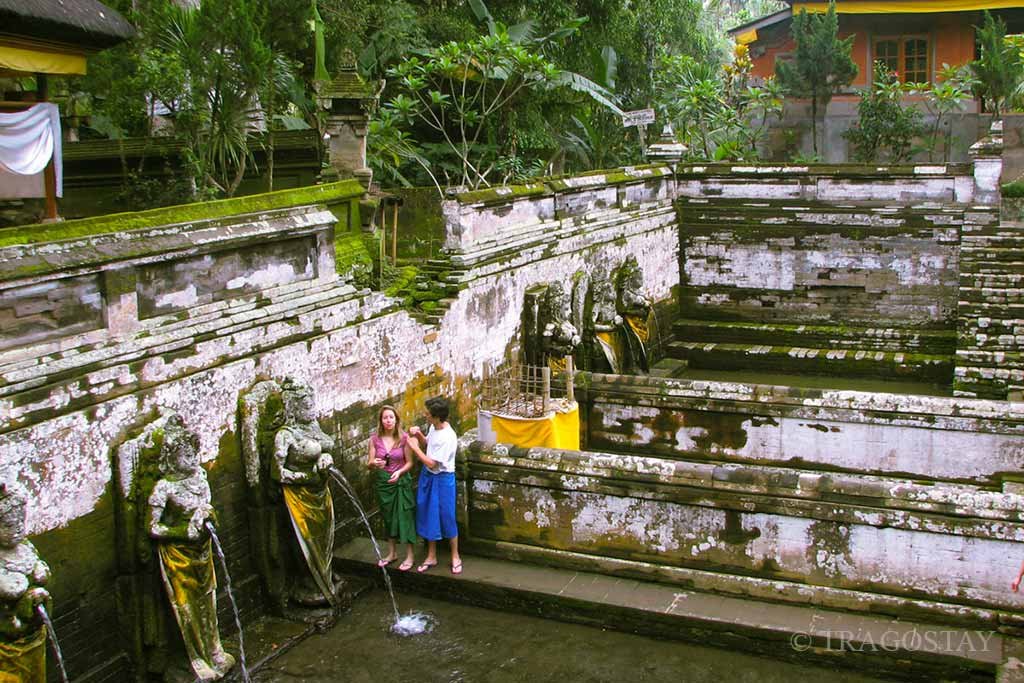
In front of the cave lies a grand rectangular bathing pool divided into two sections. It features six (originally seven) beautiful statues of nymphs, known as Widyadara-Widyadari, holding water spouts. These statues represent the holy rivers of India and also symbolize spiritual purification. The water flows from these spouts into the pools, creating a serene and also sacred atmosphere. Therefore, the structural layout represents a perfect balance between the mountain (cave) and also the water (pools).
Throughout history, Goa Gajah has served several vital roles for the Balinese people.
To fully appreciate the spiritual atmosphere and also avoid the heat, timing your visit is essential.
Log in
Don't have an account? Register
Please enter your username or email address. You will receive a link to create a new password via email.
Register with your email
Do you already have an account? Log In
Log in
Don't have an account? Register
Please enter your username or email address. You will receive a link to create a new password via email.
Register with your email
Do you already have an account? Log In