

Ulun Danu Batur Temple, or Pura Ulun Danu Batur, stands as one of the most significant and beautiful religious sites on the entire island. This grand complex is dedicated to Dewi Danu, the goddess of lakes and rivers, who controls the vital water supply for Bali’s vast rice fields. Many travelers consider this site a spiritual sanctuary because of its majestic architecture and the cool, misty atmosphere of the Kintamani highlands. Therefore, you should definitely make time to visit this sacred location to understand the deep connection between Balinese culture and nature.
This temple is widely recognized as the second most important temple in Bali, following only the Besakih Mother Temple in spiritual hierarchy. You will find that this site is one of the most culturally rich Bali Tourist Attractions for those who want to explore beyond the typical beach clubs. The complex features numerous shrines with black palm fiber roofs that look stunning against the backdrop of the mountain sky. Furthermore, the temple serves as a center for the Subak irrigation system, which is a UNESCO World Heritage cultural landscape. Consequently, a visit to Pura Ulun Danu Batur provides a profound insight into the spiritual heart and agricultural life of the Balinese people.
The history of Ulun Danu Batur Temple is a story of great faith and resilience in the face of natural disasters. Originally, the temple was located at the foot of Mount Batur near the lake shore in the old village of Batur. However, a massive volcanic eruption in 1926 destroyed the entire village and most of the original temple structures. Fortunately, the most sacred shrine dedicated to the goddess remained untouched by the flowing lava during that catastrophic event.
After the eruption, the local community decided to move the entire temple complex to its current location on the higher caldera rim. This massive effort was necessary to protect the sacred relics from future volcanic activities of the nearby mountain. Today, the new site offers a much safer environment and provides a commanding view of the surrounding volcanic landscape. Because of this move, Pura Ulun Danu Batur now sits at an elevation that often experiences a mystical, thin mist during the day.
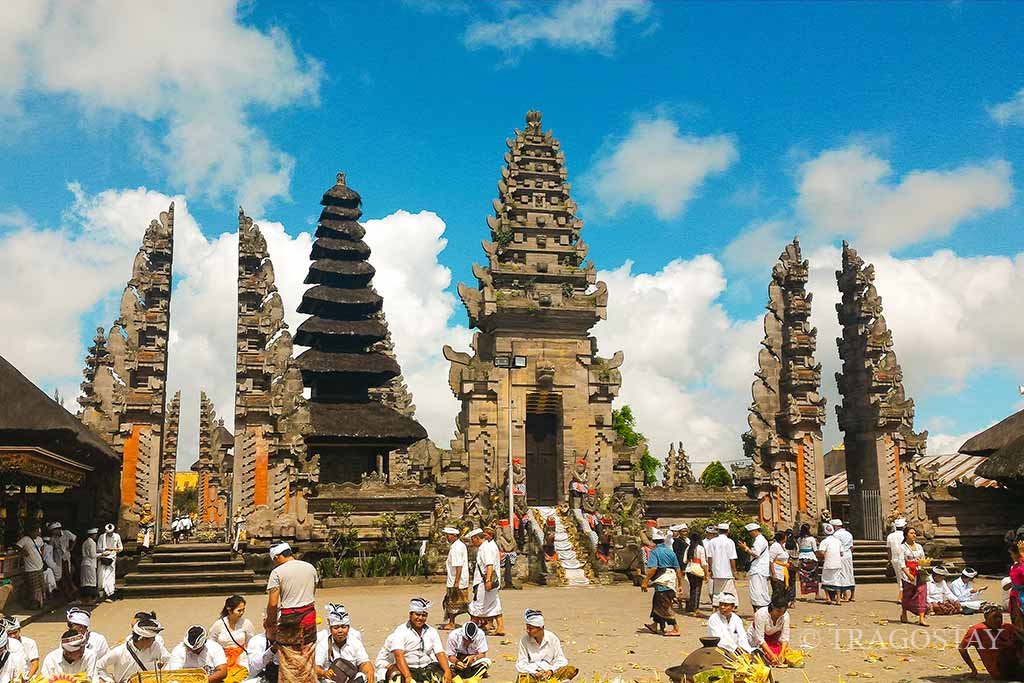
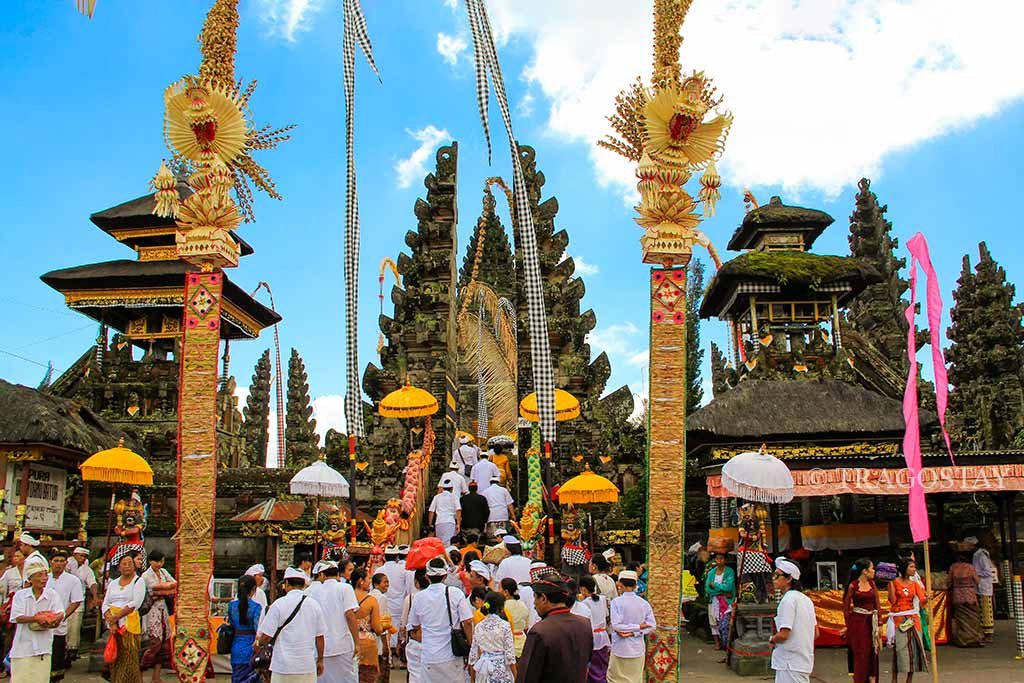
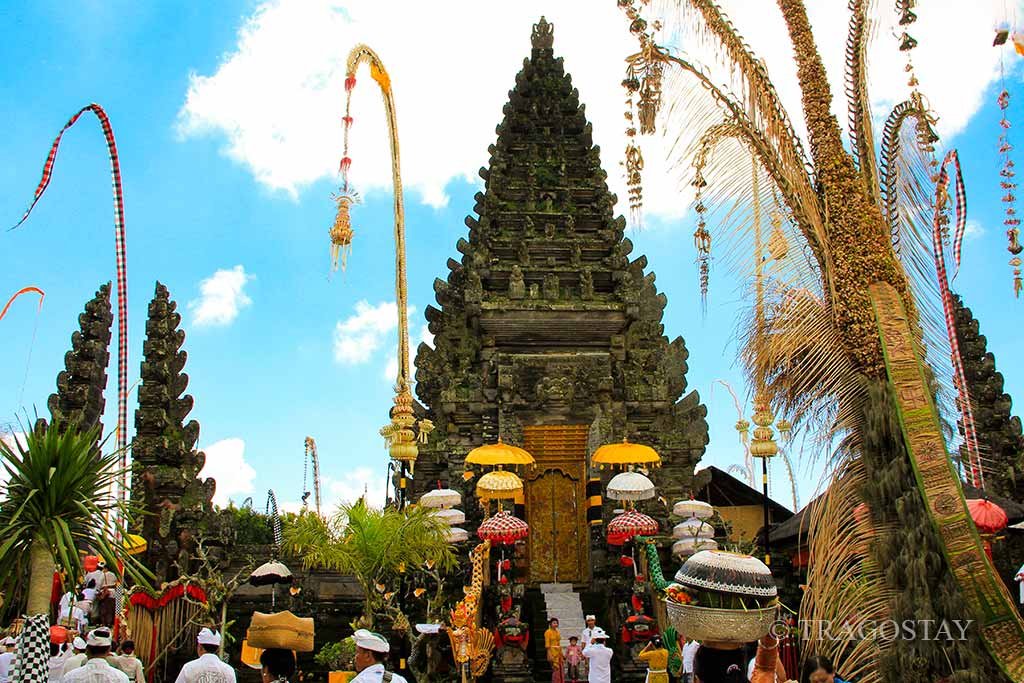

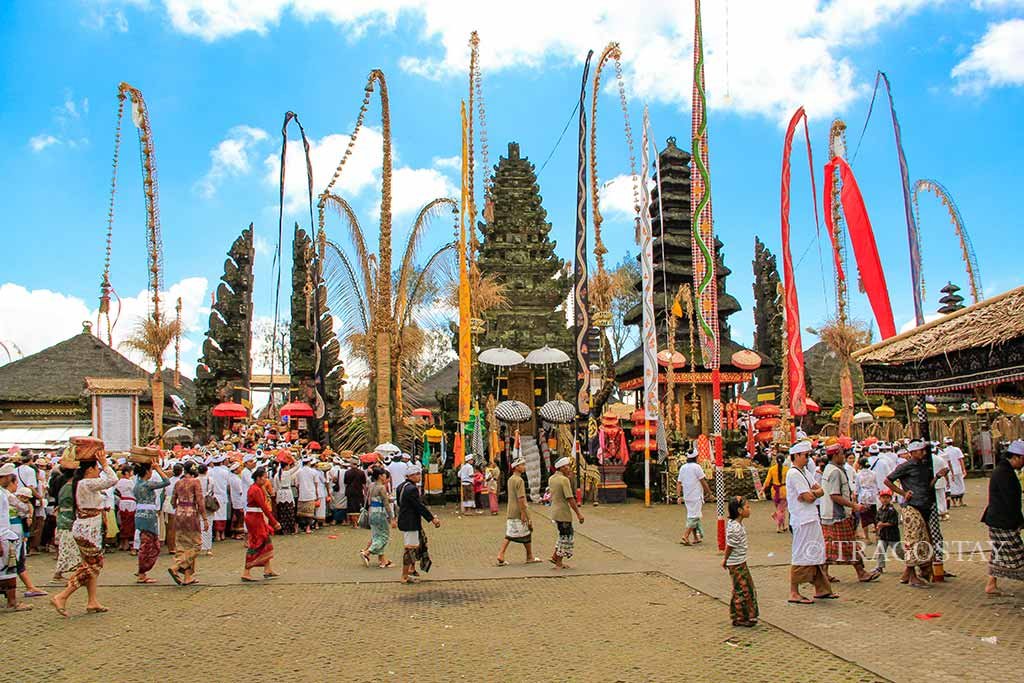

As the second most important temple in Bali, the architectural layout of this complex is incredibly detailed and follows strict traditional rules. The site consists of nine different temples that contain nearly 300 individual shrines and altars dedicated to various deities. Each section of the temple has a specific function, ranging from honoring the gods of agriculture to the guardians of the local crafts. You will notice the intricate stone carvings that depict ancient stories and mythological creatures throughout the courtyard.
The primary function of Pura Ulun Danu Batur is to act as the supreme coordinator for water distribution across central Bali. Farmers from many different districts travel here to participate in rituals that ensure their crops receive enough water for a successful harvest. This unique system shows how the Balinese people integrate their religious beliefs with practical environmental management. Therefore, the temple is not just a place of prayer but also a vital institution for the island’s food security.
You should visit this temple because it offers a very authentic and peaceful experience compared to the more crowded tourist spots in the south. The atmosphere here is deeply spiritual, especially when you hear the distant sounds of traditional bells and chanting during a ceremony. Additionally, the high-altitude location means the weather is always pleasantly cool and refreshing for a long walk. This makes it a perfect destination for those who appreciate fine art, history, and a calm environment for reflection.
Another reason to visit is the spectacular scenery that surrounds the entire temple area on the Kintamani ridge. On a clear day, you can see the peak of Mount Batur and the blue waters of the lake from the temple gates. The contrast between the dark temple structures and the vibrant green mountains creates a visual masterpiece that you will never forget. Thus, Ulun Danu Batur Temple is a dream location for travelers who want to capture the true essence of Bali’s mountain beauty.
The best thing to do is to explore the outer and inner courtyards to admire the towering Meru shrines with multiple tiers. These structures represent the sacred mountains and are the most recognizable features of Balinese Hindu architecture. While walking through the complex, you can observe the local people as they prepare elaborate offerings made of fruits and flowers. This provides a rare opportunity to witness the daily devotion that defines the local way of life.
You should also take the time to photograph the ornate “Candi Bentar” or split gateways that mark the entrance to each courtyard. These gateways are perfectly symmetrical and offer a symbolic transition from the physical world to the spiritual realm. If you are lucky, you might even witness a traditional dance performance or a gamelan orchestra during a major festival. After exploring the temple, you can browse the small local markets nearby to find unique Balinese handicrafts and textiles.
The best time to visit Pura Ulun Danu Batur is during the dry season from April to October for the best weather. During these months, you have a better chance of seeing the mountains clearly without the heavy rain or thick fog. You should try to arrive in the morning before 10:00 AM to enjoy the site before the large tour buses arrive. Additionally, the morning light is much softer and better for taking high-quality photos of the intricate stone carvings.
Most visitors reach the temple by hiring a private car from Ubud, which usually takes around one hour through scenic roads. If you are traveling from the southern areas like Nusa Dua, you should plan for a two-hour journey each way. Because the temple is located in a high-altitude area, the roads are quite steep and winding in certain sections. Therefore, having a local driver is highly recommended so you can focus on the beautiful views of the rice terraces along the way.
You must wear a sarong and a waist sash to enter the temple grounds as a sign of respect for the local culture. Even if you are wearing long pants, the traditional wrap is still required for both men and women. Furthermore, you should avoid walking in front of people who are currently praying or making offerings to the deities. Carrying a light jacket is also a good idea because the mountain wind can be quite chilly even during the day.
Please remember that you are not allowed to enter the innermost sanctum of the shrines unless you are there to pray. Always keep your voice low and avoid using a camera flash if there is a religious ceremony taking place nearby. Women who are currently on their period are traditionally requested not to enter the temple for spiritual reasons. Finally, always follow the instructions of the temple guards to ensure that you have a safe and respectful visit.
Yes, every visitor must purchase an official ticket at the entrance gate before entering the temple complex. This fee usually includes the rental of a traditional sarong and a waist sash for your visit.
You are welcome to visit during ceremonies as long as you remain quiet and stay behind the designated prayer areas. This is a great time to observe vibrant Balinese culture and traditional music in action.
No, this temple is different from Pura Ulun Danu Beratan which sits directly on a lake in Bedugul. Pura Ulun Danu Batur is located on the ridge of the Kintamani caldera and has its own unique atmosphere.
Most visitors spend about 45 minutes to an hour exploring the various courtyards and taking photographs of the architecture. You might stay longer if you decide to hire a local guide to explain the history.
You must wear a traditional sarong and a sash around your waist to be allowed inside the sacred areas. These items are mandatory even if you are already wearing long pants or modest clothing.
Visiting on a weekday is generally better because the temple can become very crowded with local pilgrims during the weekends. However, visiting during a full moon offers a very special spiritual experience due to the many ceremonies.
Log in
Don't have an account? Register
Please enter your username or email address. You will receive a link to create a new password via email.
Register with your email
Do you already have an account? Log In
Log in
Don't have an account? Register
Please enter your username or email address. You will receive a link to create a new password via email.
Register with your email
Do you already have an account? Log In