

Tirta Gangga Water Palace represents one of the most elegant and historically significant landmarks in the Karangasem Regency of East Bali. Originally built as a royal retreat, this sprawling garden complex features a stunning labyrinth of pools, fountains, and stone carvings surrounded by lush tropical flora. You will immediately notice that the name itself carries a sacred meaning, translating to “Water from the Ganges,” which refers to the holy river in India. Consequently, this destination has become a cornerstone of Bali Tourist Attractions, drawing thousands of visitors who wish to witness its regal charm and spiritual atmosphere.
If you appreciate fine architecture and serene aquatic landscapes, this water palace offers a visual feast that is truly unique to the island. Most travelers visit specifically to walk across the iconic stepping stones that sit just above the water’s surface. Therefore, it provides an interactive experience that feels like walking on a lake filled with vibrant, giant koi fish. Furthermore, the cool mountain springs that feed the pools ensure that the air remains fresh and invigorating throughout the day. This guide will help you discover the royal history, the cultural functions, and the best ways to enjoy your visit to this aquatic paradise.
Tirta Gangga Water Palace owes its existence to the creative vision of the last King of Karangasem, Anak Agung Anglurah Ketut Karangasem. First, the King designed the palace in 1946 as a place for the royal family to relax and host important foreign dignitaries. Historically, the King was a talented architect himself and personally supervised the construction to ensure it met his high artistic standards. Additionally, the design reflects a unique blend of traditional Balinese motifs and Chinese architectural influences. Most historians admire how the King successfully integrated the natural landscape into the palace’s sophisticated water system.
The history of the palace took a tragic turn during the massive eruption of Mount Agung in 1963. Volcanic ash and hot debris almost completely buried the gardens and destroyed many of the original stone sculptures. Furthermore, the earthquake tremors caused the foundations of the pools to crack, leading to a period of neglect for several decades. However, the local community and the royal heirs eventually launched a massive restoration project to return the palace to its former glory. Consequently, the site you see today is a meticulously rebuilt version of the 1946 original. Most visitors find that the restoration has preserved the authentic royal spirit while improving the infrastructure for modern tourism.
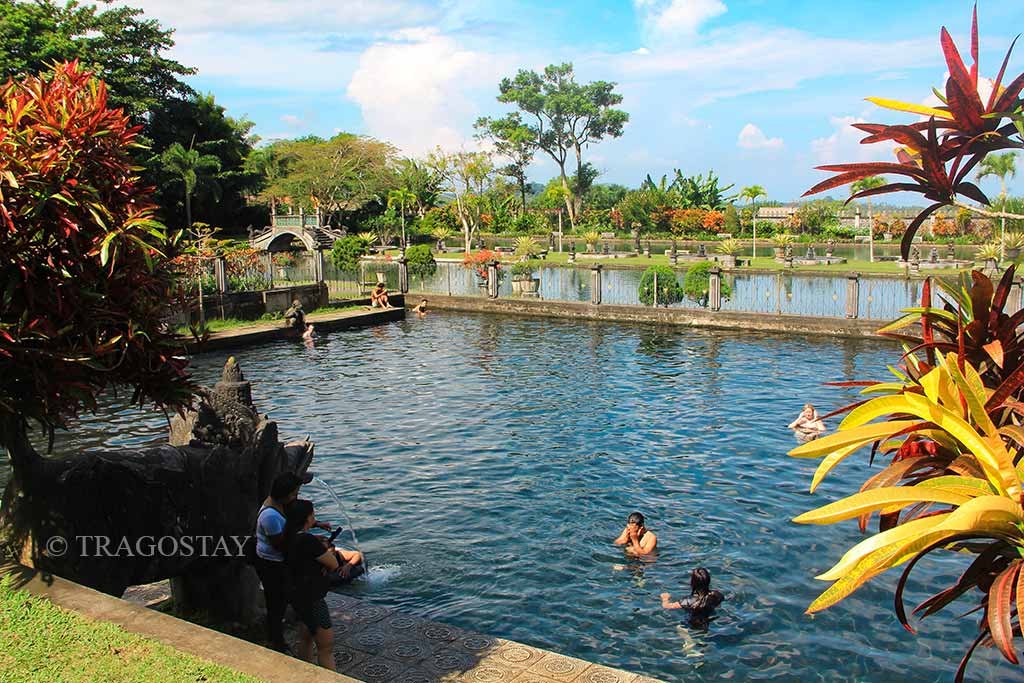
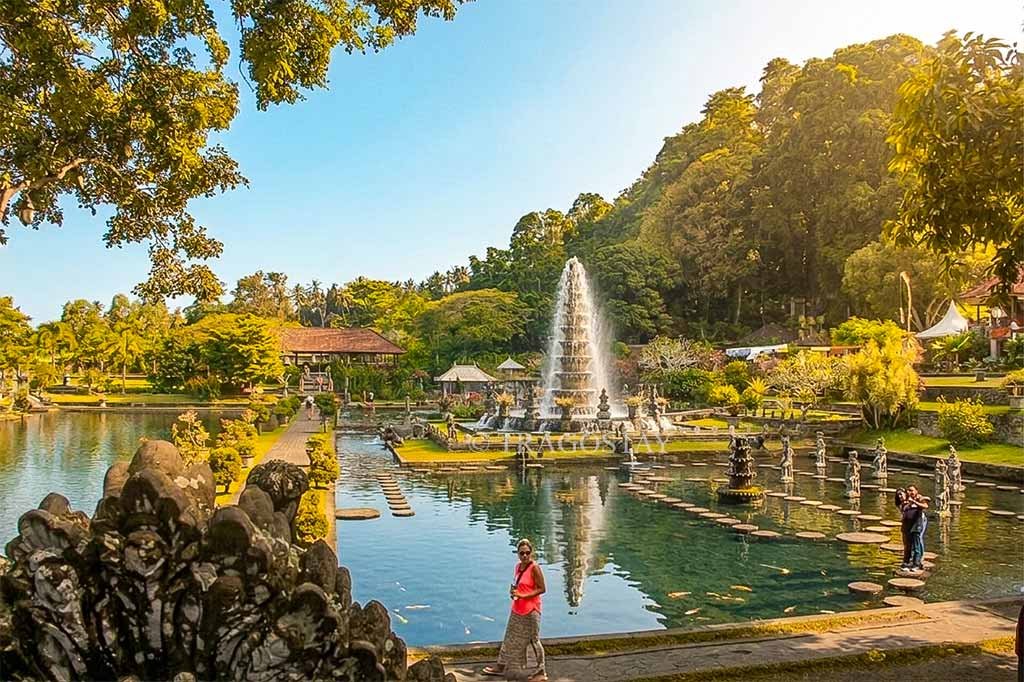
Tirta Gangga Water Palace functioned primarily as a sanctuary for the Karangasem royal family to escape the pressures of palace life. The King designed the various pools and pavilions to provide different levels of privacy and luxury for his guests. Furthermore, the surrounding rice fields and forests acted as a natural barrier to ensure the family could enjoy their time in total peace. These gardens were not merely for display; they served as a living space for reflection and creative inspiration. Therefore, the palace represents the lifestyle of Balinese royalty during the mid-20th century.
Another vital function of the palace involves its role as a source of holy water for the surrounding villages. The water that flows through the fountains comes from a natural spring located beneath a large banyan tree at the site’s highest point. Specifically, local Balinese Hindus consider this water to be sacred and use it for various “Melukat” purification ceremonies. Furthermore, the water system distributes this resource to the nearby rice paddies, supporting the local agricultural community. Consequently, the palace serves as both a spiritual hub and a practical infrastructure for the village of Ababi.
Furthermore, the palace has transformed into a world-class tourism landmark that showcases Balinese heritage to a global audience. It acts as a primary source of income for the local regency and provides jobs for hundreds of guides, gardeners, and vendors. By opening its gates to international travelers, the palace promotes the preservation of Balinese art and architecture. Consequently, your visit helps fund the ongoing maintenance required to keep the fountains running and the gardens blooming. Most people find that the palace successfully balances its roles as a sacred site and a top-tier tourist attraction.
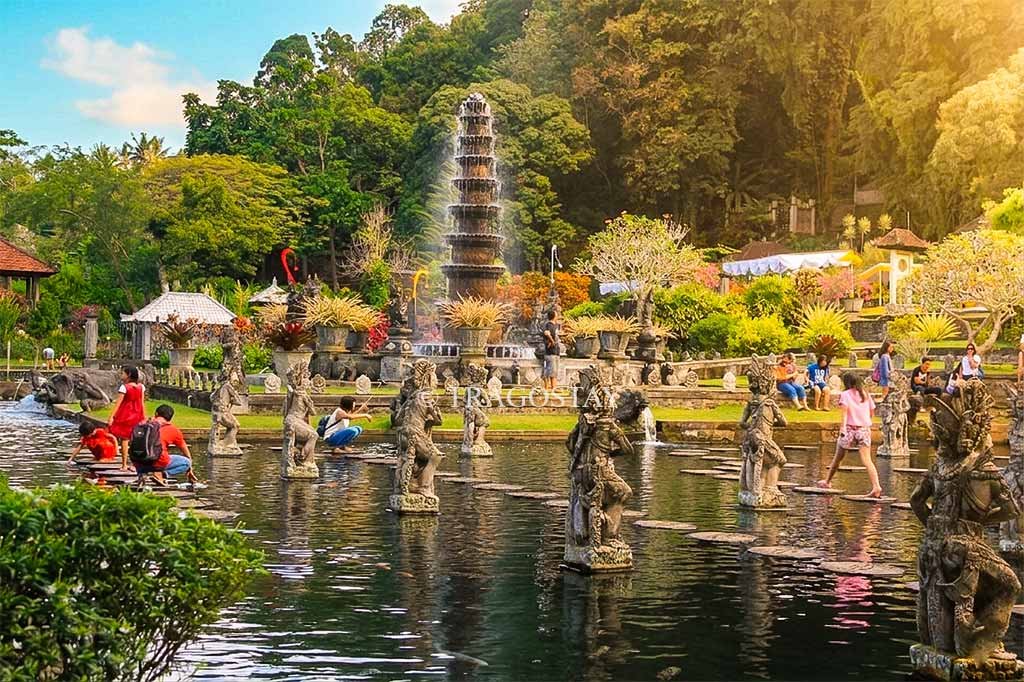
Tirta Gangga Water Palace is famous worldwide for the rows of hexagonal stepping stones that crisscross the main koi pond. You can walk along these stones and find yourself surrounded by hundreds of giant, colorful koi fish waiting for a snack. Furthermore, the stones provide a unique perspective for photography, making it look like you are floating in the middle of a royal lake. This feature is particularly popular with families and social media enthusiasts who want a dynamic and beautiful background. Consequently, the stepping stones have become the most photographed spot in East Bali.
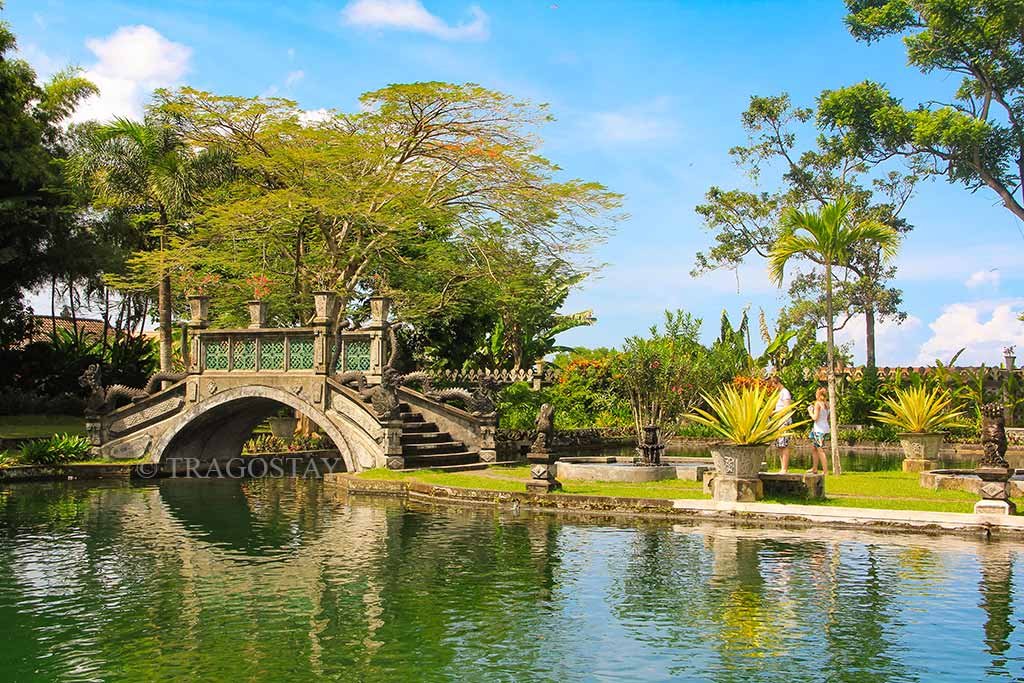
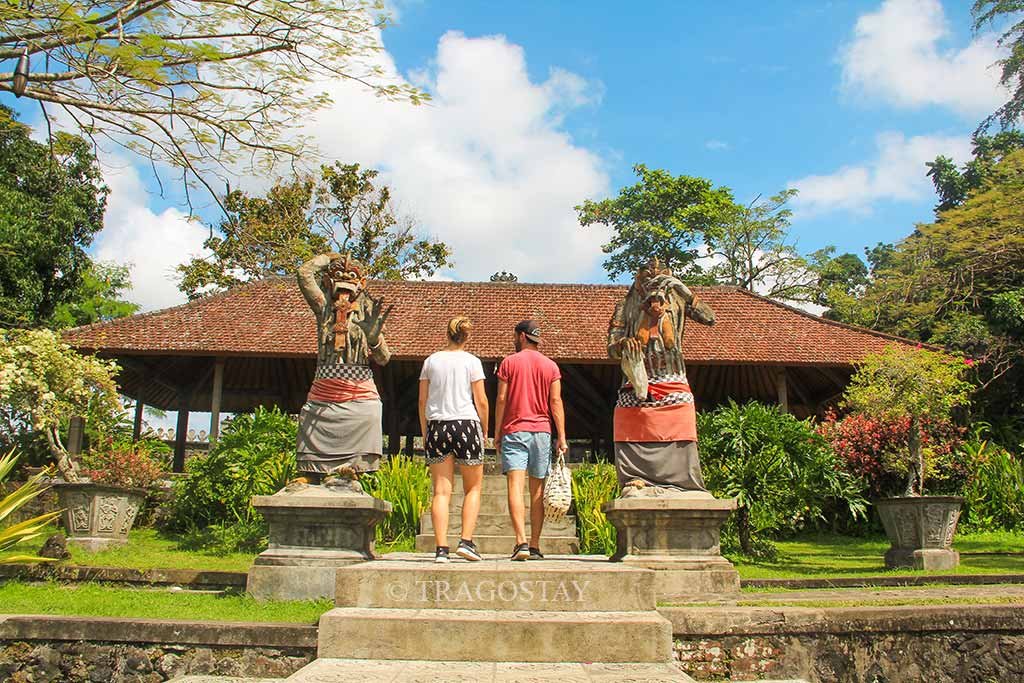
The architecture of the palace is a fascinating study of cultural fusion and artistic detail. You will notice traditional Balinese demons and guardians standing alongside sculptures that have a distinct Chinese aesthetic. Furthermore, the intricate carvings on the bridges and pavilions display a level of craftsmanship that is rare in modern constructions. This blend of styles reflects the cosmopolitan outlook of the Karangasem Kingdom during the colonial era. Therefore, art lovers will spend hours admiring the unique patterns and the structural harmony of the garden.
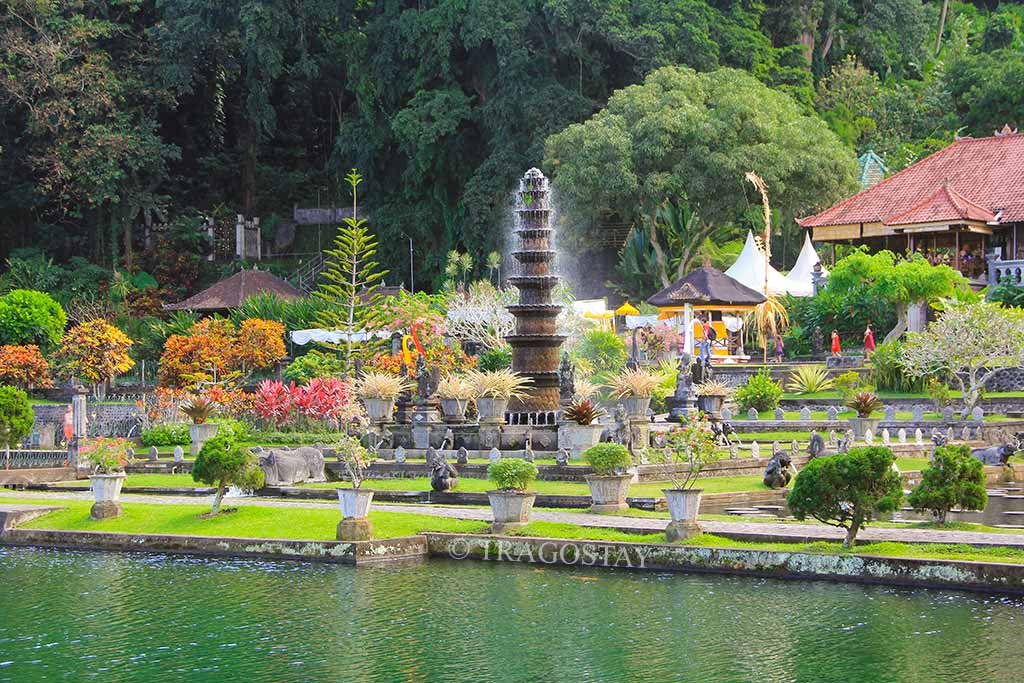
In the center of the complex stands the “Nawa Sanga” fountain, which features eleven tiers of flowing water. First, the fountain represents the guardians of the nine directions in the Balinese Hindu cosmos. The sound of the falling water creates a soothing melody that echoes throughout the entire park. Additionally, the fountain’s height and design make it a powerful centerpiece that ties all the different pools together. You will certainly find that sitting near this fountain provides a deep sense of calm and cooling relief on a warm day.
The most popular activity for every visitor is buying a small bag of fish food at the entrance to feed the resident koi. As you scatter the pellets from the stepping stones, the water explodes with movement and color as the fish gather around you. Furthermore, some of the koi are impressively large and have been living in the pools for many years. This interaction provides a fun and tactile way to connect with the nature of the palace. Consequently, children and adults alike find this simple activity to be the highlight of their afternoon.
If you want to capture the perfect shot, you should spend time navigating the stepping stones during the softer light of the morning. The reflection of the statues and the sky on the water’s surface creates a magical and surreal effect. Furthermore, the bridges and the central fountain provide excellent framing for your portraits. We suggest waiting for a gap in the crowds to get a clean shot without other tourists in the background. Therefore, patience is key to getting a professional-looking photo at this busy location.
Many visitors do not realize that they can actually swim in a separate, dedicated pool filled with fresh mountain spring water. For a small additional fee, you can enjoy a refreshing dip in the same waters that once refreshed the King. Furthermore, the swimming area is surrounded by stone walls and greenery, giving it the feel of a hidden royal bath. The water is incredibly clean and free of chemicals because it flows continuously from the natural spring. Consequently, it is the perfect way to cool down after a long day of exploring East Bali.
You should take the time to wander through the various paths that lead away from the main ponds. The palace features a wide variety of tropical plants, flowering hibiscus, and towering banyan trees. Furthermore, you will find hidden corners with stone benches where you can sit and enjoy the view in relative privacy. The back sections of the park are much quieter and allow you to appreciate the sounds of nature. Indeed, the gardens are a testament to the King’s love for horticulture and landscape design.
To have the most peaceful experience at Tirta Gangga Water Palace, we highly recommend arriving before 9:00 AM. During these early hours, the light is soft for photography and the large tour buses from South Bali have not yet arrived. Furthermore, the koi fish are usually more active and hungry during the cooler morning period. Conversely, visiting in the late afternoon around 4:30 PM also offers a beautiful golden glow over the water. However, midday can be quite hot and crowded, so try to plan your itinerary accordingly.
The palace is located in the village of Ababi, approximately two to three hours away from the main tourist hubs like Seminyak or Kuta. Most travelers visit this site as part of a loop that includes Lempuyang Temple and Amed Beach. Furthermore, the roads in Karangasem are well-paved and offer stunning views of Mount Agung and the coastline. If you are not comfortable riding a motorbike for long distances, hiring a private driver is a very convenient and affordable option. Consequently, you can relax and enjoy the scenery without the stress of navigating the mountain turns.
The management has updated the facilities to ensure a comfortable experience for the thousands of international guests visiting daily.
Actually, a small bag of fish food usually costs around IDR 10,000. You can buy multiple bags from the vendors near the entrance if you want a longer feeding session.
Unlike Balinese temples, there is no strict requirement to wear a sarong. However, you should still dress modestly and avoid walking around in just swimwear outside of the pool area.
Generally, drone use is allowed but you may need to pay an additional “drone fee” at the ticket counter. Always check with the staff first to avoid any fines or complaints.
The ponds are relatively shallow, usually around knee-deep to waist-deep. Nevertheless, you should be careful on the stepping stones as they can become slippery when wet.
No, you typically have to pay a small extra fee to access the public swimming area. This fee helps maintain the cleanliness and the water flow of the spring.
Most visitors find that one to two hours is enough to explore the ponds, take photos, and have a quick snack. If you plan to swim, you should add another hour to your visit.
Log in
Don't have an account? Register
Please enter your username or email address. You will receive a link to create a new password via email.
Register with your email
Do you already have an account? Log In
Log in
Don't have an account? Register
Please enter your username or email address. You will receive a link to create a new password via email.
Register with your email
Do you already have an account? Log In