

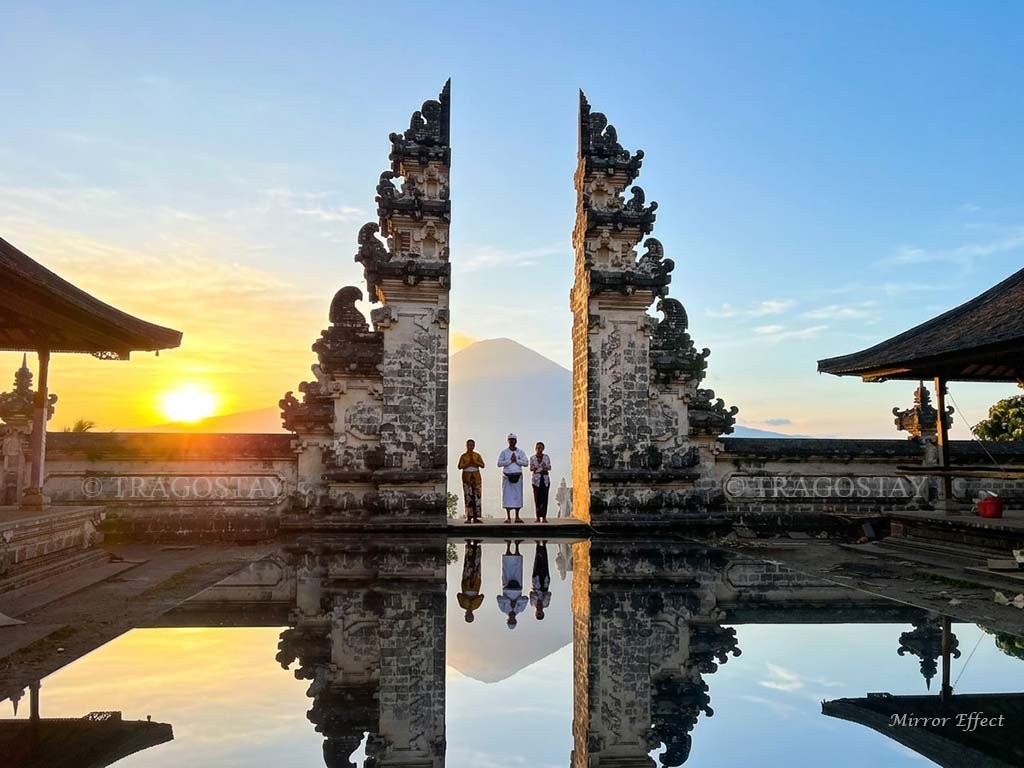
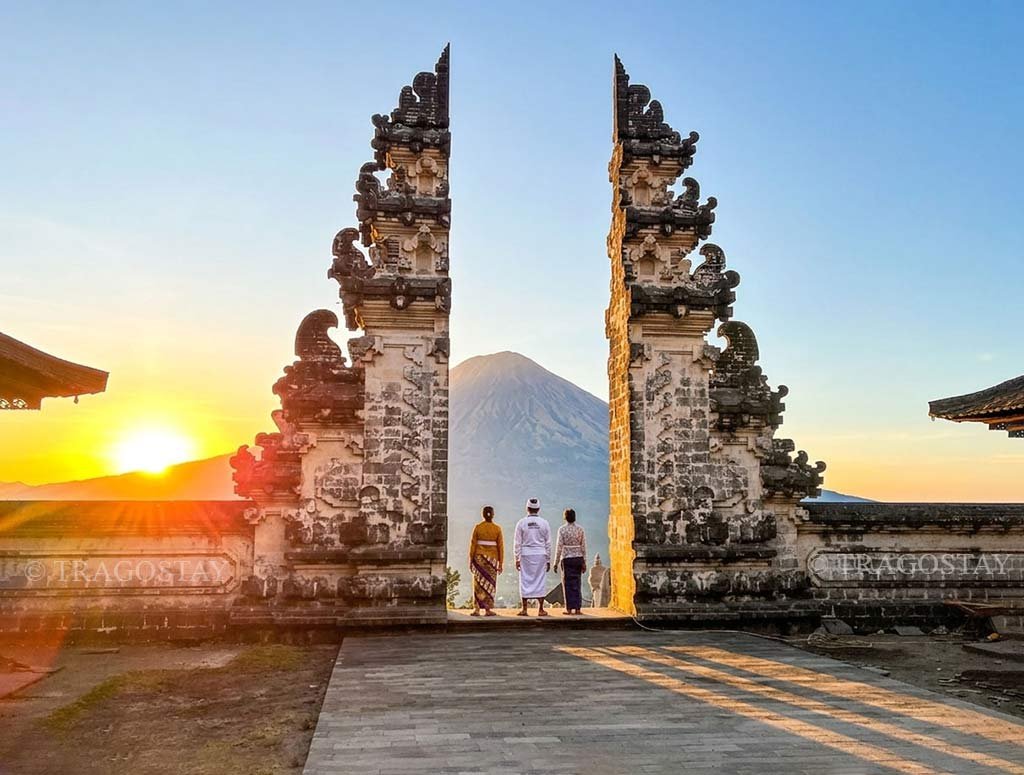
Lempuyang Temple, known locally as Pura Lempuyang Luhur, represents one of the oldest and most highly regarded Hindu temples on the island of Bali. Perched on the slope of Mount Lempuyang in East Bali, this sacred complex offers a spiritual experience combined with a visual spectacle that has captured the world’s attention. You will likely recognize the iconic “Gates of Heaven,” a towering white split gate that perfectly frames the smoking peak of Mount Agung in the distance. Consequently, this destination has evolved into one of the most essential Bali Tourist Attractions for international travelers seeking the perfect photograph.
If you desire to explore the deep spiritual roots of the Balinese people while enjoying breathtaking mountain views, this temple is a mandatory stop. Most visitors appreciate the cooler air of the Karangasem highlands as they ascend the slopes to reach the sanctuary. Therefore, it provides a refreshing break from the tropical heat of the southern beaches. Furthermore, the site holds a position of immense importance in the Balinese Hindu cosmos as a guardian of the east. This guide will help you understand the profound history, sacred functions, and practical tips for navigating your visit to this majestic mountain landmark.
Lempuyang Temple possesses a heritage that predates many of the more famous temples found in Central and South Bali. First, local legends suggest that the foundation of the temple dates back to the era of the first spiritual leaders who brought Hinduism to the island. Historically, the temple serves as a pillar of the “Sad Kahyangan,” or the six most sacred sanctuaries that provide spiritual balance to Bali. Additionally, the stone structures have undergone various renovations over the centuries to maintain their grandeur against the elements. Most scholars agree that the site has been a place of worship for well over a thousand years.
The location of the temple on the eastern tip of Bali is not a matter of coincidence. Specifically, Balinese Hinduism associates the east with the god Iswara and the color white, symbolizing light and new beginnings. Furthermore, the mountain itself is considered a holy entity that connects the human realm with the divine world of the gods. Consequently, the act of climbing the mountain is seen as a form of physical and spiritual purification for the devotees. Most Balinese people believe that completing the pilgrimage to the highest temple brings great merit and blessings to their families.
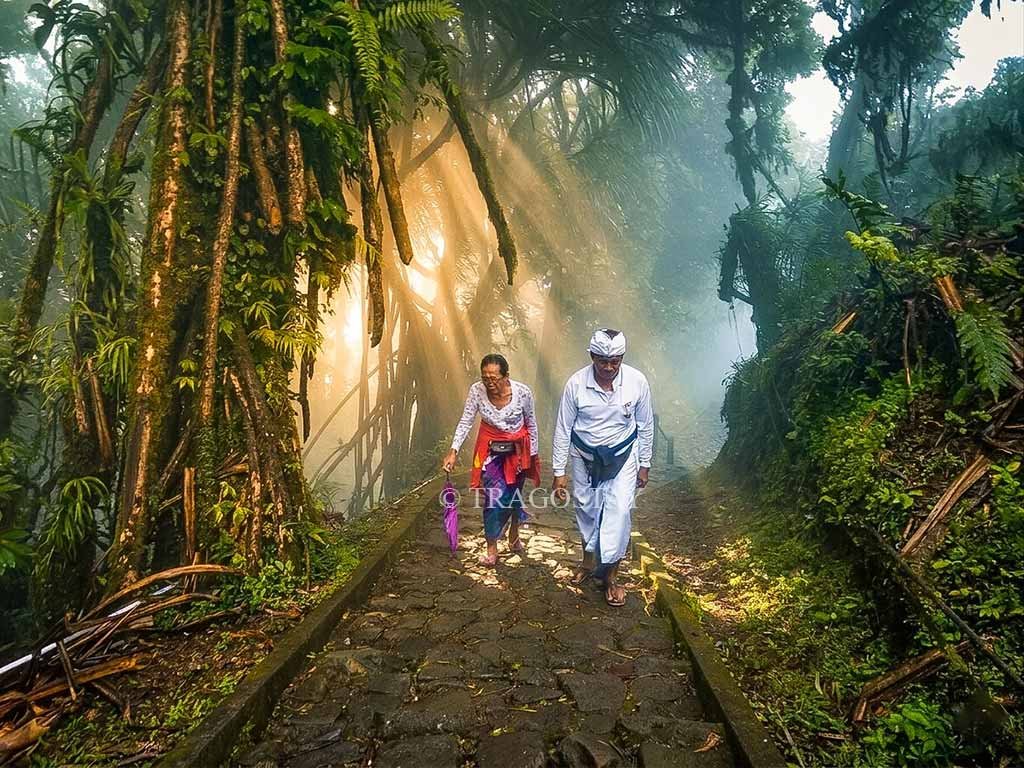
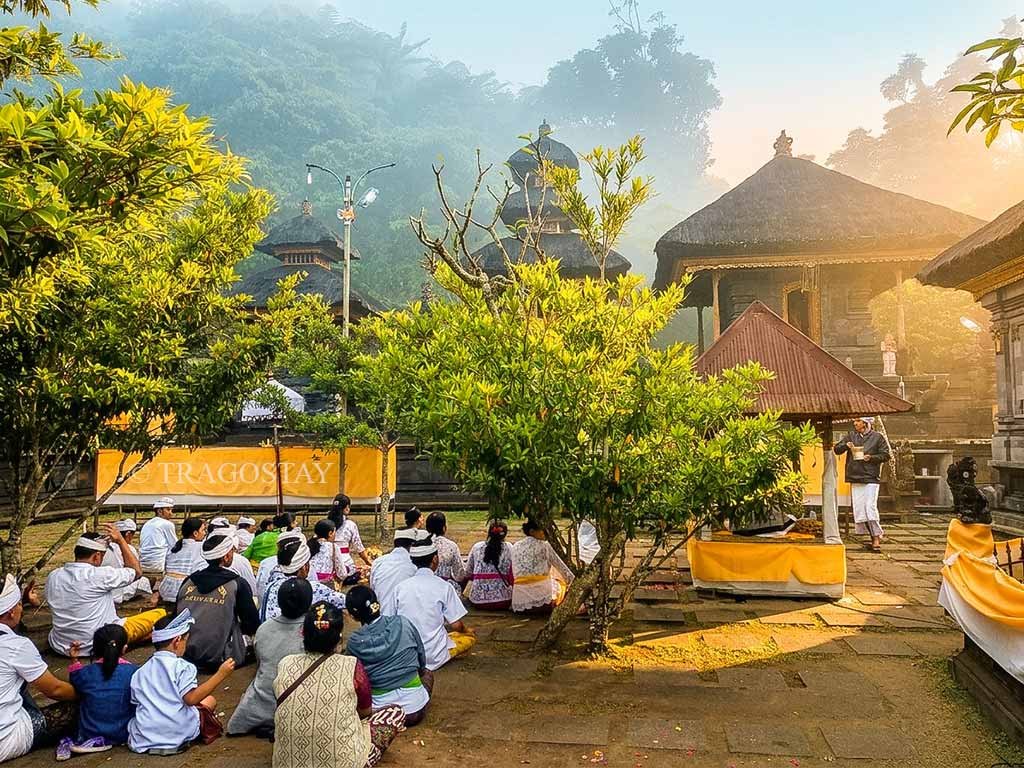
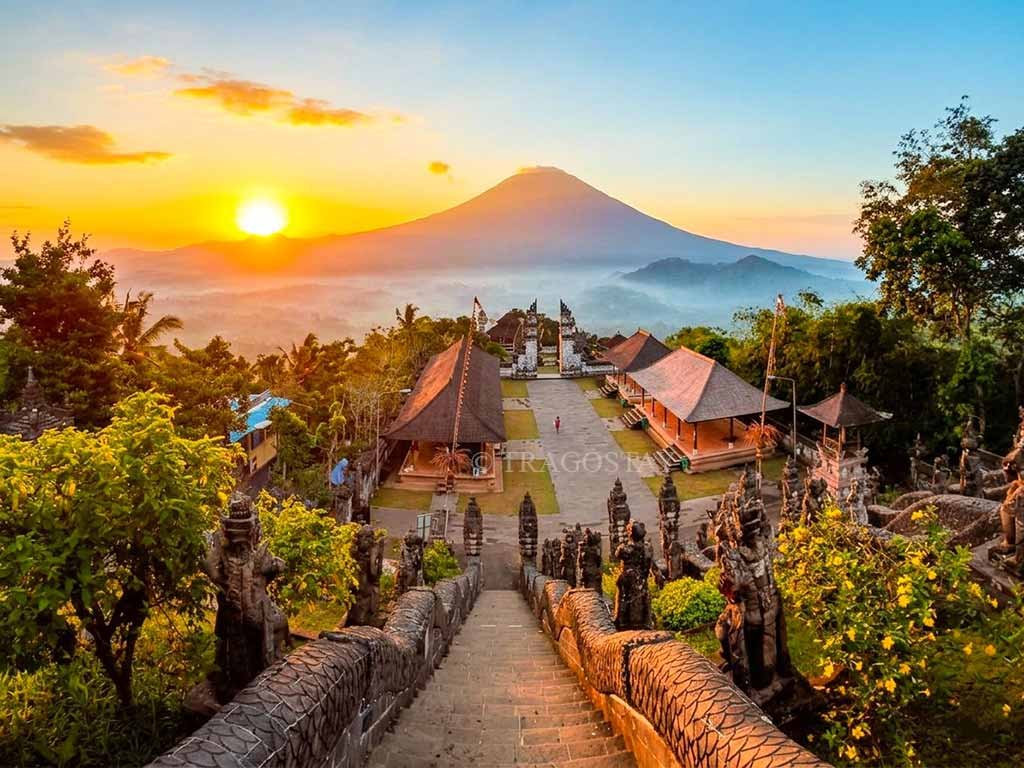
Lempuyang Temple functions primarily as a destination for Balinese Hindus to perform “Melukat” or holy water purification rituals. Throughout the year, you will see groups of locals dressed in traditional white attire carrying elaborate offerings up the mountain paths. Furthermore, the temple is famous for its “Tirta” or sacred spring water, which priests collect from bamboo groves growing near the summit. These rituals remind the community of the importance of maintaining a clean heart and mind. Therefore, the site remains a vibrant living temple rather than just a historical monument for tourists.
Another vital function of the temple involves its role as a spiritual protector for the entire island. Because it is part of the Sad Kahyangan group, the temple is believed to shield Bali from negative spiritual influences coming from the eastern horizon. In addition to daily prayers, the temple hosts massive ceremonies every six months according to the Balinese lunar calendar. These events ensure that the cosmic balance between the gods, nature, and humans remains harmonious. Indeed, the temple is a cornerstone of the island’s identity and religious stability.
Furthermore, the monastery provides a challenging but rewarding path for those who seek to practice spiritual discipline through hiking. The entire complex consists of seven different temples scattered from the base to the very peak of the mountain. Consequently, reaching the highest shrine requires climbing over 1,700 stone steps through the lush rainforest. Most pilgrims use this journey as a time for meditation, focusing their breath and thoughts as they ascend toward the clouds. Most importantly, the physical effort required to reach the top serves to humble the ego before the divine.
The temple is well-managed to accommodate the large number of worshippers and also tourists who visit daily.
Lempuyang Temple became a global sensation primarily because of the stunning visual symmetry of its main gate. You will find the white Candi Bentar at the second level of the complex, standing as a threshold between the mundane and the sacred. Furthermore, on clear days, the silhouette of Mount Agung appears perfectly centered between the two gate towers. This creates a surreal and heavenly composition that feels almost too beautiful to be real. Consequently, thousands of travelers visit every day specifically to capture this legendary image for their memories.
Beyond the famous gate, the temple offers some of the most expansive views of the East Bali coastline and the surrounding hills. You can see the sparkling blue water of the Lombok Strait and the distant mountains of the island of Lombok on a clear morning. Furthermore, the perspective from 1,175 meters above sea level gives you a sense of the island’s grand scale and natural diversity. This connection between the mountain and the sea is a central theme in Balinese philosophy. Therefore, the site is a paradise for nature lovers and landscape photographers alike.
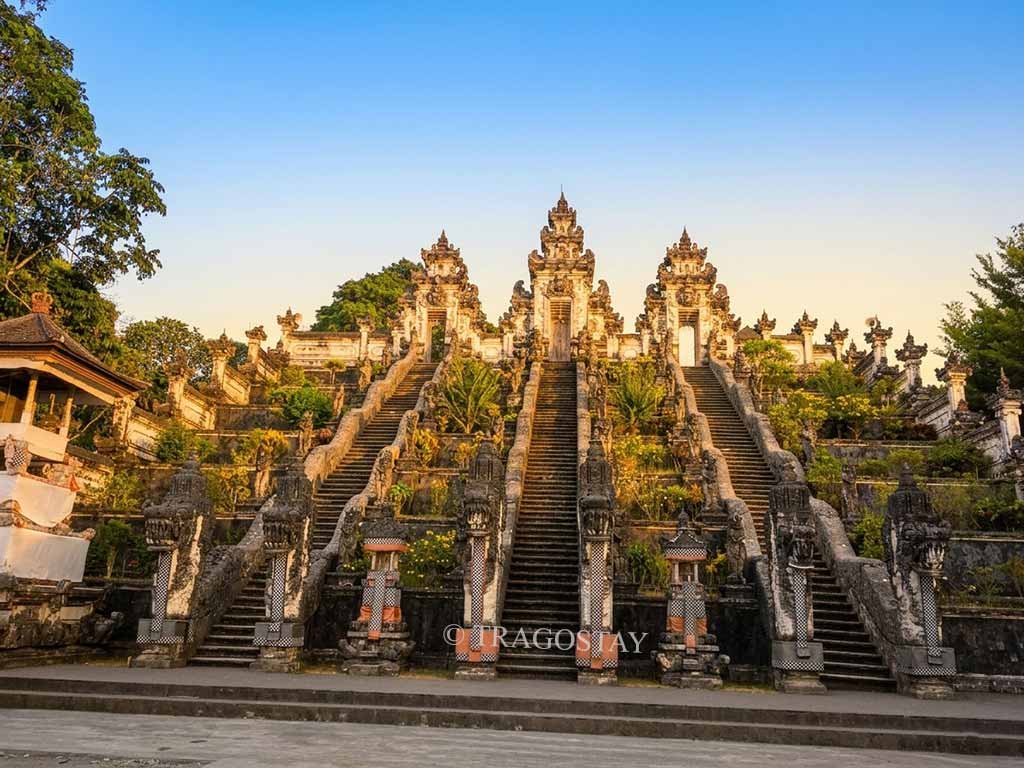
The architecture of the inner courtyard features three massive staircases guarded by intricately carved dragon-like creatures known as Naga. First, these sculptures symbolize the protective forces of the earth and the underworld. The central staircase is reserved strictly for priests and ceremonial processions, while visitors use the side paths to show respect. Additionally, the stone carvings display a level of detail that showcases the peak of Balinese artistic skill. You will certainly feel the weight of history as you stand before these grand mythical guardians.
The most popular activity for every visitor is queuing for a turn to stand between the Gates of Heaven. Usually, local photographers use a small piece of glass or a mirror held under the phone camera to create a stunning water-reflection effect. Furthermore, they are experts at directing poses to ensure your silhouette looks dramatic against the volcano. While the queue can be long, the final result is a professional-grade photo that serves as a perfect souvenir. Therefore, we recommend arriving as early as possible to get a low queue number.
If you have the stamina, you should consider exploring beyond the first two temples and hiking toward the summit. The trail takes you through a dense forest inhabited by monkeys and filled with the sound of tropical birds. Furthermore, the higher temples offer a much more quiet and spiritual atmosphere compared to the busy photo spot below. Each level provides a different perspective of the mountain and a unique set of shrines to discover. Consequently, the hike transforms your visit into a true adventure rather than a simple photo stop.
We suggest spending time observing the local worshippers as they present their “Canang Sari” or flower offerings at the shrines. You can learn about the specific meanings of the colors and symbols used in Balinese Hindu rituals. Furthermore, the local guides are usually happy to explain the rules of etiquette and the history of the different temple levels. By showing interest in the culture, you foster a deeper connection with the local community. Consequently, you will leave the temple with a much richer understanding of the Balinese way of life.
Arriving before dawn allows you to witness the magical transition of light over Mount Agung. The sky often turns shades of deep purple and bright orange as the sun rises from the eastern ocean. Furthermore, the early morning mist often settles in the valleys below, making Lempuyang Temple feel like it is floating in the sky. This is the best time for photography because the volcano is usually most visible before the afternoon clouds move in. Therefore, the extra effort of an early wake-up call is absolutely worth the reward.
To avoid the largest crowds and secure a good spot in the photo queue, we highly recommend arriving by 6:00 AM. During these early hours, the atmosphere is most peaceful and the weather is cool enough for the uphill walk. Furthermore, the chance of seeing Mount Agung without a shroud of clouds is much higher in the morning. Conversely, visiting in the late afternoon can also be beautiful, but you may face a very long wait for your turn at the gate. Regardless of your choice, always check the local weather to ensure clear visibility.
The management of Lempuyang Temple has recently implemented a mandatory shuttle bus system to reduce traffic on the narrow mountain roads. First, you must park your vehicle at the large designated parking area at the base of the hill. From there, small buses transport visitors up the steep incline to the temple entrance every few minutes. Additionally, your entrance ticket usually includes the shuttle fee and the mandatory rental of a sarong. Consequently, the journey is now much safer and more organized than in previous years. Therefore, plan for an extra 20 minutes of travel time for the shuttle process.
The local community has developed several facilities to handle the high volume of international guests visiting the site.
Actually, the wait can range from one to three hours depending on the season and the time of day. Therefore, we suggest bringing a book or something to occupy your time while you wait for your number.
Yes, every visitor must wear a sarong and a waist sash, regardless of what they are wearing underneath. Furthermore, you should ensure your shoulders are covered as a sign of respect for the sacred site.
Historically, Balinese Hindu law prohibits anyone with an open wound or women during their period from entering the temple grounds. Consequently, visitors are expected to respect this local tradition when planning their visit.
Generally, the use of drones is prohibited within the temple complex to maintain the peaceful atmosphere. However, you might find specific spots outside the temple gates where drone use is permitted by the locals.
Indeed, the “water reflection” seen in photos is a clever trick using a mirror held under the camera lens. There is no actual pond at the gate, but the final image is still incredibly beautiful.
While there are monkeys in the forest, they are usually less aggressive than those in Ubud. Nevertheless, you should keep your belongings secure and avoid feeding them to prevent any issues.
Log in
Don't have an account? Register
Please enter your username or email address. You will receive a link to create a new password via email.
Register with your email
Do you already have an account? Log In
Log in
Don't have an account? Register
Please enter your username or email address. You will receive a link to create a new password via email.
Register with your email
Do you already have an account? Log In