

Besakih Temple stands as the largest and most significant Hindu monument on the entire island of Bali. Perched nearly one thousand meters up the side of the majestic Mount Agung, this expansive complex represents the spiritual heart of the Balinese people. You will find that the site consists of at least twenty-three separate but related temples, all built on parallel ridges. Consequently, this destination has earned the title of the “Mother Temple” and remains a vital inclusion for any list of Bali Tourist Attractions. Most visitors feel a sense of overwhelming grandeur as they gaze upon the towering volcanic peak that serves as the temple’s backdrop.
If you desire to witness the peak of Balinese religious devotion, this sacred site offers an experience that is both visually stunning and culturally profound. Therefore, it provides a unique opportunity to see ancient traditions thriving in the modern world. Furthermore, the architectural scale of the complex is unmatched anywhere else in Indonesia. Whether you are a spiritual seeker or a lover of history, the journey to the slopes of the volcano will surely leave a lasting impression on your mind. This guide explores the deep history, essential functions, and practical travel advice for visiting this massive holy landmark.
Besakih Temple possesses a history that stretches back more than a thousand years into the mists of Balinese antiquity. First, many scholars believe the site served as a prehistoric holy place long before the arrival of Hinduism on the island. Historically, the 8th-century priest Rsi Markandeya established the foundations of the current temple while seeking spiritual enlightenment. Additionally, the complex grew significantly over the centuries as various Balinese dynasties added their own shrines to honor their ancestors. Most locals consider the ground itself to be infused with divine energy because of its proximity to the volcano.
One of the most miraculous chapters in the history of Besakih Temple occurred during the massive eruption of Mount Agung in 1963. While lava flows destroyed many surrounding villages, the molten rock stopped just meters away from the temple walls. Furthermore, the volcanic ash and debris caused only minor damage to the sacred structures, despite the scale of the explosion. Many Balinese people interpreted this event as a powerful sign from the gods that the temple was under divine protection. Consequently, the survival of the Mother Temple strengthened the faith of the population and increased the site’s prestige as a sanctuary of miracles.
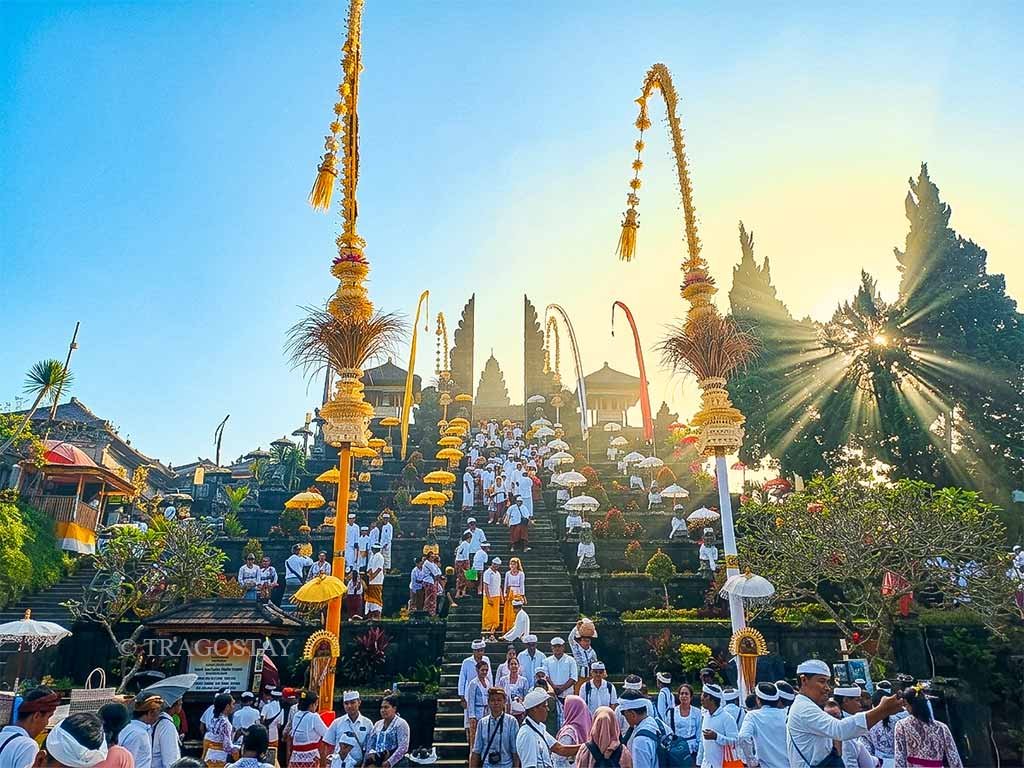
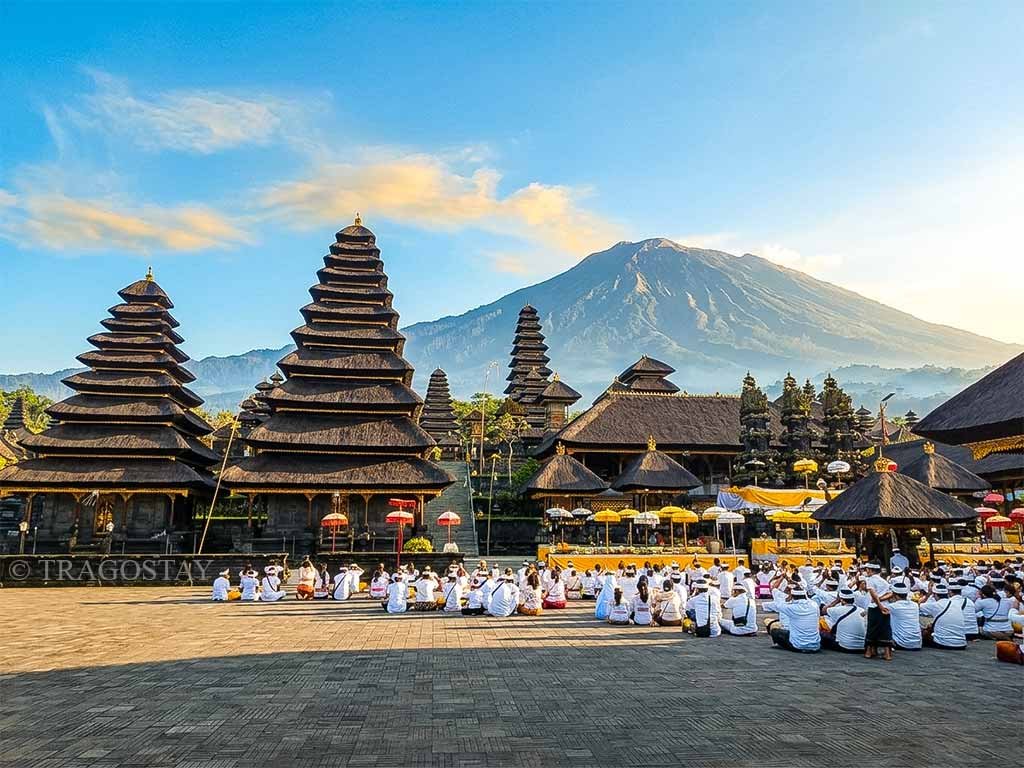
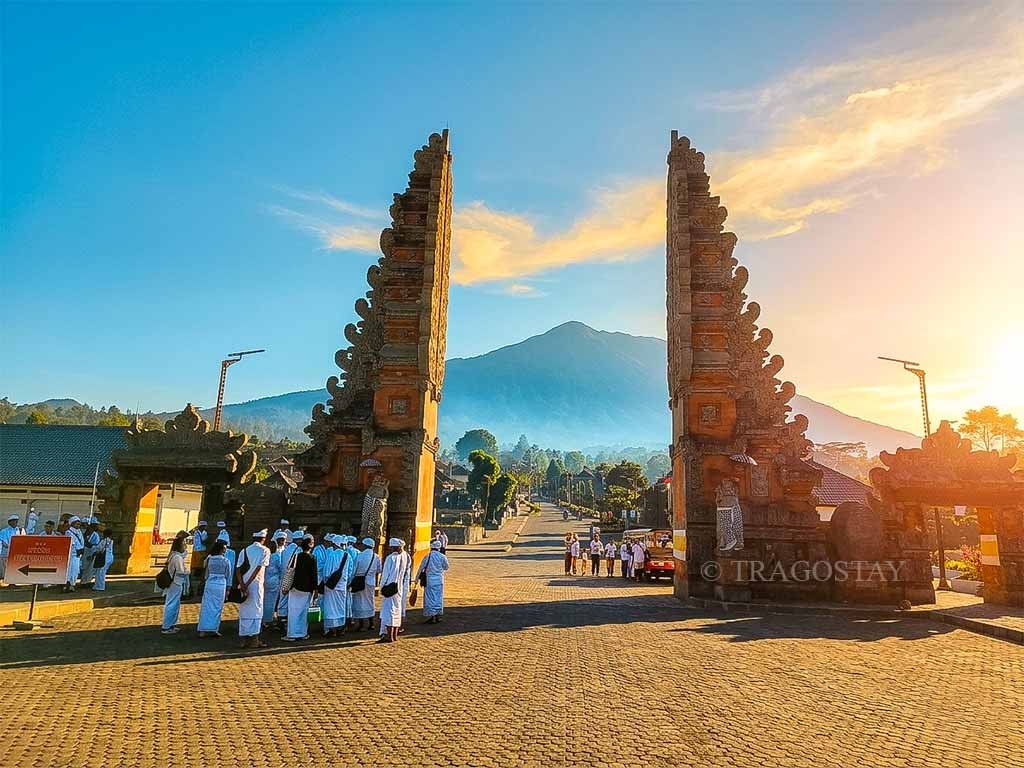
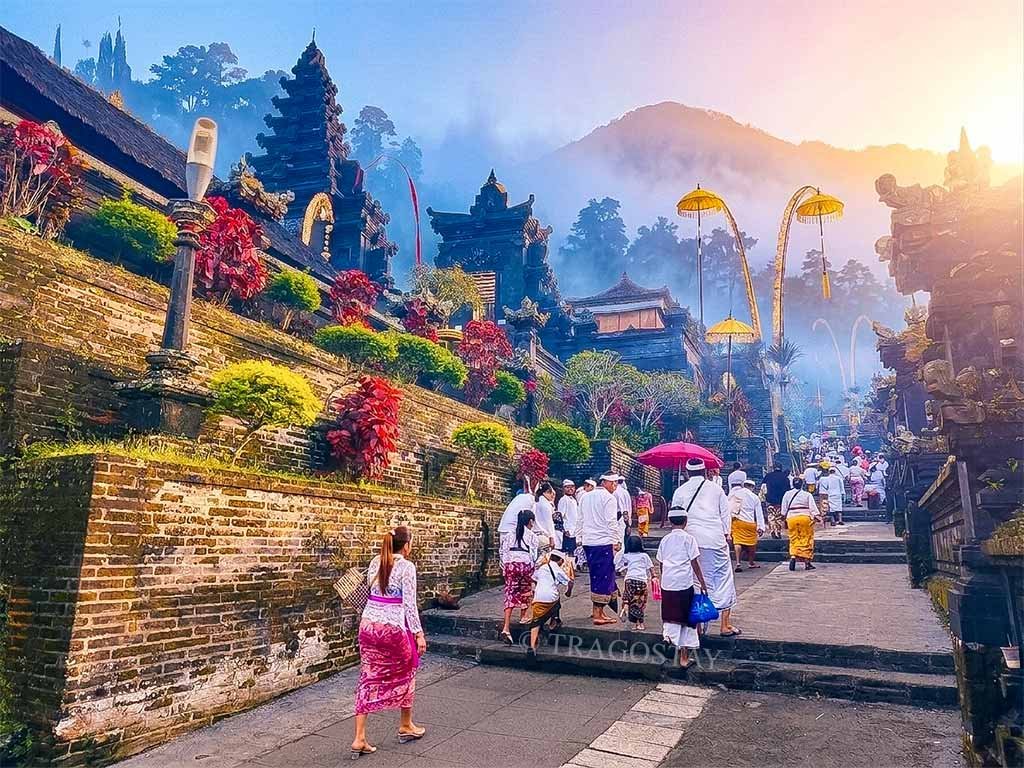
Besakih Temple serves as the primary point of pilgrimage for all Balinese Hindus, regardless of their specific village or caste. Throughout the year, thousands of devotees travel from across the island to present elaborate offerings and seek blessings. Furthermore, the temple hosts the most important state ceremonies that ensure the spiritual balance of the entire region. These rituals often involve hundreds of priests and traditional dancers performing in perfect harmony. Therefore, the site acts as a grand stage for the most complex and beautiful expressions of Balinese faith.
Another vital function of the site is its role as a unifying symbol for the diverse communities of Bali. Because the complex contains shrines for various kinships and social groups, it allows all citizens to feel a sense of belonging at the “Mother Temple.” In addition to the main sanctuary, the smaller temples represent specific regions and professional guilds. This inclusive structure ensures that every Balinese person has a dedicated space for prayer within the grand walls. Indeed, the temple reflects the complex social fabric of the island, woven into a single religious landscape.
Furthermore, the temple remains the central hub for massive lunar festivals that occur every few decades, such as the Eka Dasa Rudra. During these times, the entire complex is draped in white and yellow cloth, and the air is filled with the scent of incense and flowers. Consequently, the atmosphere becomes electric with a level of energy that you can feel even as a foreign visitor. Most guests find the sight of thousands of people dressed in traditional white attire to be an unforgettable visual spectacle. Most importantly, these festivals remind everyone of the eternal cycle of creation and destruction.
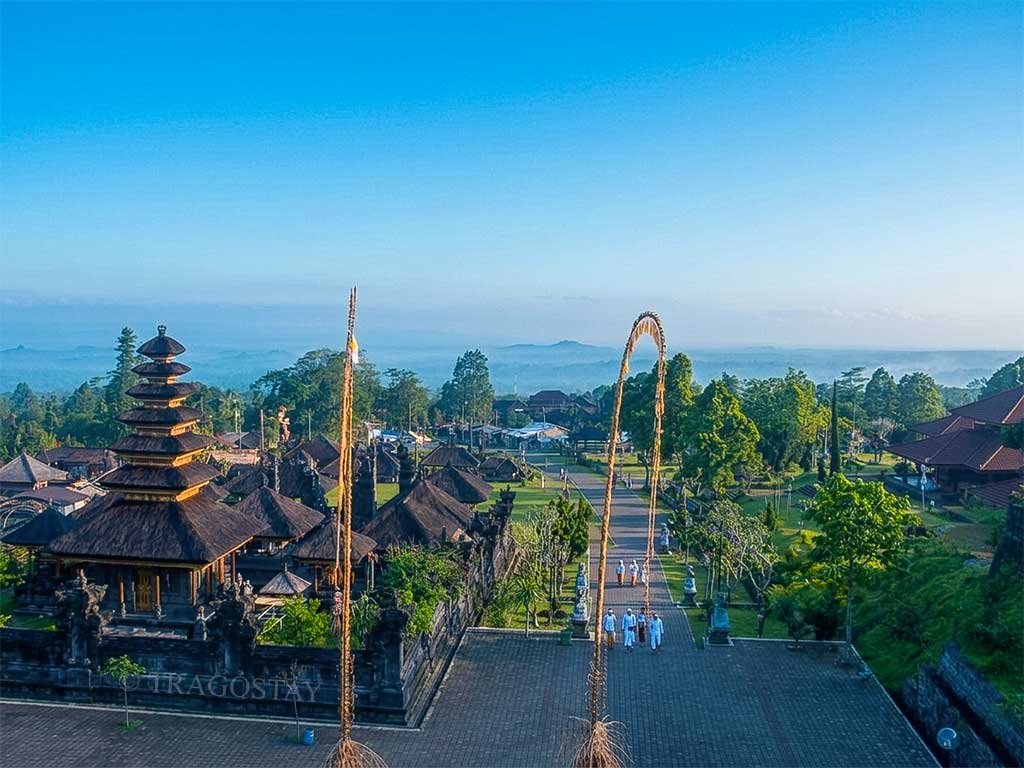
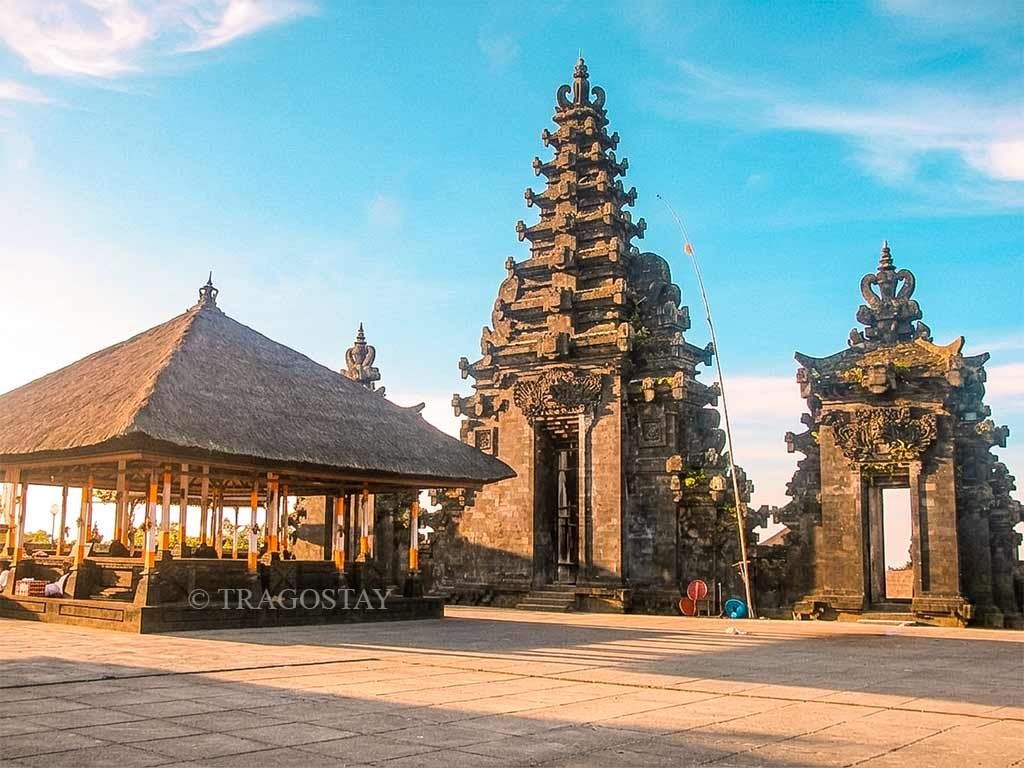
Besakih Temple features a series of grand staircases that lead upward toward the clouds, symbolizing the path to the heavens. You will notice the iconic Candi Bentar or split gateways that mark the entrance to each courtyard. Furthermore, the towering black palm-fiber roofs of the Meru shrines create a dramatic silhouette against the sky. These structures vary in height, with some reaching eleven tiers, representing the highest level of spiritual importance. Consequently, the site provides a masterclass in traditional Balinese building techniques and artistic symbolism.
The location of the temple offers some of the most spectacular panoramic views available in Indonesia. On a clear day, you can see the smoking crater of Mount Agung directly behind the main pagoda. Furthermore, looking downward from the higher levels reveals a sea of green forests and distant rice terraces stretching toward the ocean. This connection between the earth and the sky makes the temple feel like a gateway between worlds. Therefore, photography enthusiasts will find endless opportunities to capture the majesty of the Balinese landscape.
Visiting Besakih Temple allows you to experience a level of tranquility and reverence that is rare in busy tourist areas. Even with many people around, the scale of the mountain seems to absorb the noise, leaving a quiet and respectful air. Furthermore, the constant sound of bells and chanting creates a meditative background for your exploration. Many people find that simply sitting on the stone steps helps them feel more grounded and peaceful. Indeed, the ancient energy of the site has a way of calming even the most restless minds.
The primary activity for every guest is visiting the Pura Penataran Agung, the largest and most central temple in the complex. You should walk slowly up the main stairs and observe the stone statues of characters from the Ramayana and Mahabharata epics. Furthermore, the central courtyard contains the “Lotus Seat” or Padmasana, which is the most sacred spot dedicated to the supreme God. Most visitors spend a significant amount of time here to appreciate the sheer size of the sanctuary. Therefore, ensure you have comfortable walking shoes as the terrain involves many steps.
We highly recommend hiring a local certified guide to explain the specific meanings of the various shrines and altars. These guides often share stories from Balinese mythology that you will not find in standard guidebooks. Furthermore, they can help you navigate the complex etiquette and ensure you do not accidentally enter restricted areas reserved for prayer. By engaging with a local expert, you also contribute directly to the livelihood of the surrounding village. Consequently, your visit becomes a much more educational and socially responsible experience.
If you wish to capture the entire scale of the complex, you should walk to the higher levels located near the back of the site. From these vantage points, the multiple tiers of the black roofs look like a forest of pagodas rising from the mountain. Furthermore, the early morning light provides the perfect conditions for capturing the vibrant colors of the temple decorations. Therefore, try to arrive before the mountain mist rolls in during the late afternoon. Most professional photographers consider this to be one of the best spots in Asia for architectural photography.
To have the best experience at Besakih Temple, we suggest arriving between 8:00 AM and 10:00 AM. During these morning hours, the air is crisp and the summit of Mount Agung is usually visible without clouds. Furthermore, the temple is less crowded before the large tour groups arrive from the southern resorts. Conversely, visiting during a full moon or a major ceremony offers a more vibrant cultural experience, though it will be much busier. Regardless of when you go, always check the local ceremonial calendar to see if any restricted events are taking place.
Reaching the temple from the southern parts of Bali typically takes about two to three hours by car or motorbike. The management has recently introduced a new shuttle service from the main parking area to the temple entrance to improve traffic flow. Furthermore, your ticket price now includes the shuttle bus, a local guide, and the rental of a traditional sarong. Consequently, the process of visiting has become much more organized and transparent for international travelers. Therefore, you should prepare for a full day of travel to fully enjoy the experience without feeling rushed.
The local government has invested heavily in modern facilities to accommodate the millions of people who visit the Mother Temple annually.
Yes, every visitor must wear a traditional sarong and a waist sash to enter the sacred grounds. Usually, the price of your entrance ticket includes a sarong rental for the duration of your visit.
In the past, visitors complained about unofficial guides, but the new management system has significantly improved transparency. Always use the official guides provided at the ticket office to avoid any issues.
There are several hundred steps to reach the highest points of the complex. Consequently, visitors with limited mobility should take frequent breaks and stay on the lower levels.
Generally, the inner prayer areas are reserved for Hindu worshippers only. However, you can see everything clearly from the gates and the surrounding pathways.
The authorities will close the temple if Mount Agung shows signs of an imminent eruption. Therefore, you should always check the current volcanic alert level before you depart.
Log in
Don't have an account? Register
Please enter your username or email address. You will receive a link to create a new password via email.
Register with your email
Do you already have an account? Log In
Log in
Don't have an account? Register
Please enter your username or email address. You will receive a link to create a new password via email.
Register with your email
Do you already have an account? Log In