

Tanah Lot Temple stands as a monumental masterpiece of spiritual architecture and natural beauty on the southwestern coast of the island. As the most famous landmark on the Bali Tourist Attractions list, this ancient Hindu Temple on the Rock draws millions of visitors who wish to witness its dramatic silhouette against the Indian Ocean. Located in the Tabanan Regency, the temple sits majestically atop a massive offshore rock that remains surrounded by crashing waves during high tide. Consequently, the site serves as a primary symbol of Balinese Hinduism and the island’s romantic charm.
Visitors will find that the surrounding cultural park offers expansive green spaces and stunning cliffside views. Moreover, the local authorities have preserved the sacred atmosphere despite the site’s immense global popularity. While you stand on the shoreline, the salty mist and the golden light of the sun will surely create a lasting memory. Indeed, this offshore sanctuary represents the ultimate intersection of nature and divinity in Bali.
Walking toward the coast from the entrance gate feels like a journey through Bali’s rich commercial and spiritual heart. Hundreds of local vendors line the path, offering traditional crafts and refreshing drinks to excited travelers. Nevertheless, the true spectacle begins once you reach the edge of the cliffs. You will quickly notice how the temple seems to float on the water when the tide rises. Because of its unique geological position, Tanah Lot offers a visual drama that no other temple on the island can match.
Furthermore, the crashing waves against the dark volcanic rock create a powerful energy that visitors can feel immediately. Therefore, your visit becomes a multi-sensory experience that combines the sound of the sea with the visual beauty of ancient stone.
Exploring this legendary sea temple offers a profound insight into how Balinese people harmonize their lives with the ocean. For over five centuries, Tanah Lot has functioned as one of the seven sea temples that form a spiritual chain around the coast. Although Bali features thousands of inland shrines, none possess the specific coastal prestige of this rocky outpost. The temple architecture follows the traditional “Meru” style with tiered roofs that point toward the heavens. Consequently, the silhouette of the temple is instantly recognizable to anyone who has seen a postcard of Indonesia.
Interestingly, the accessibility of the temple depends entirely on the rhythm of the tides. During low tide, you can actually walk across the sand to reach the base of the rock formation. Most visitors spend their time exploring the tide pools or receiving a blessing with holy water from the priests.
Furthermore, the panoramic views from the northern and southern cliffs provide the perfect vantage point for panoramic photography. Since the site is vast, it manages to accommodate large crowds without losing its sense of grandeur. This blend of accessibility and mystery makes it a perfect destination for both first-time tourists and returning travelers. Additionally, the entrance fees contribute to the maintenance of the sacred grounds and the surrounding infrastructure. Thus, your presence supports the preservation of Bali’s cultural heritage.
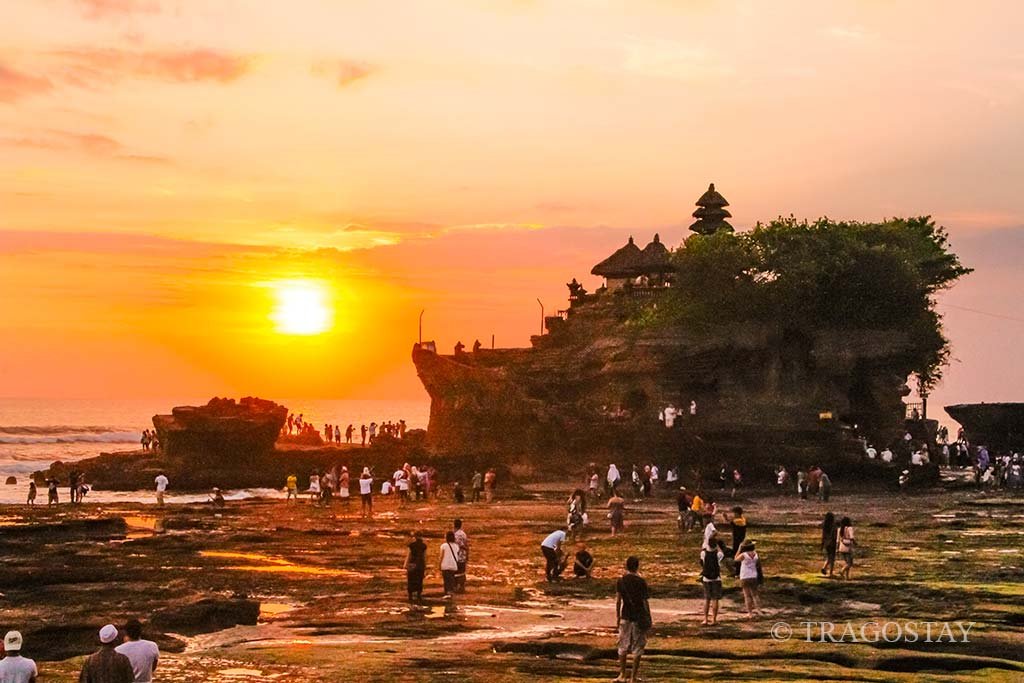
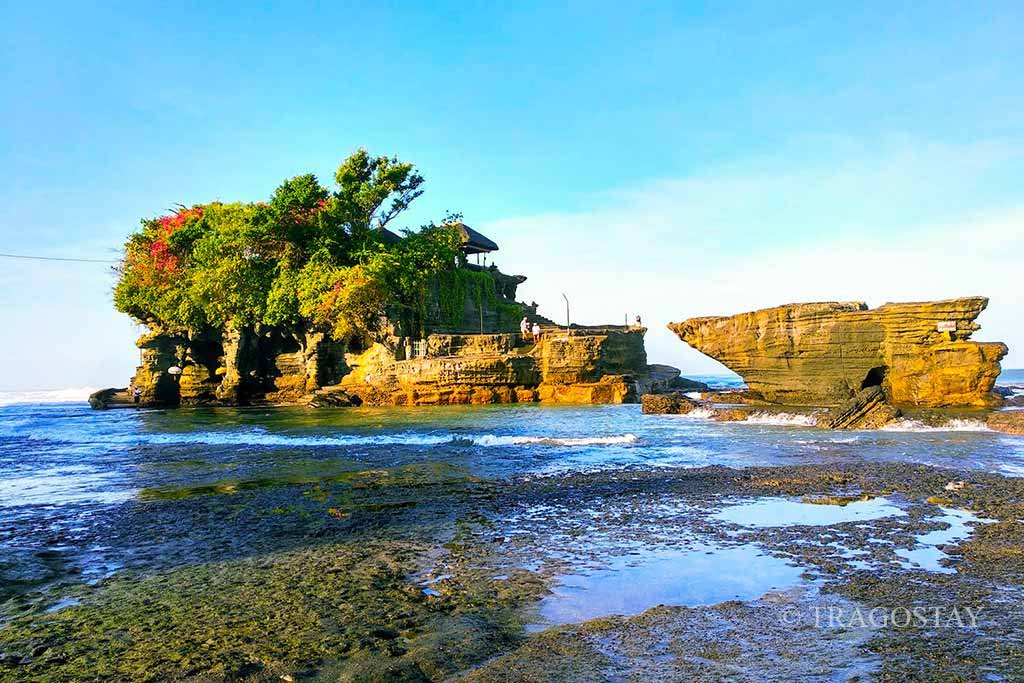
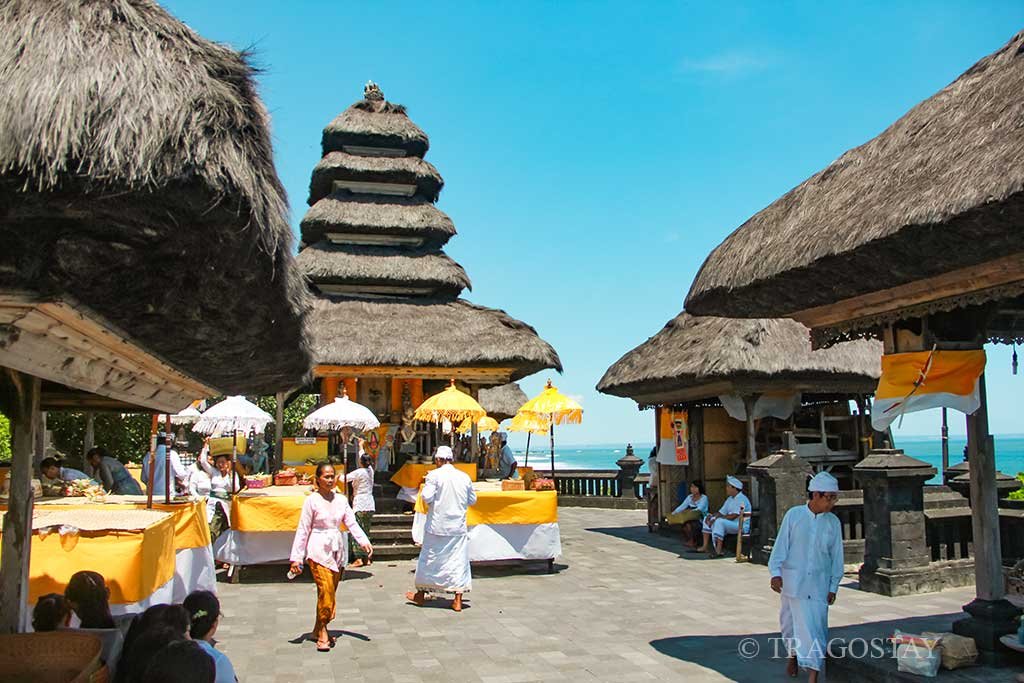
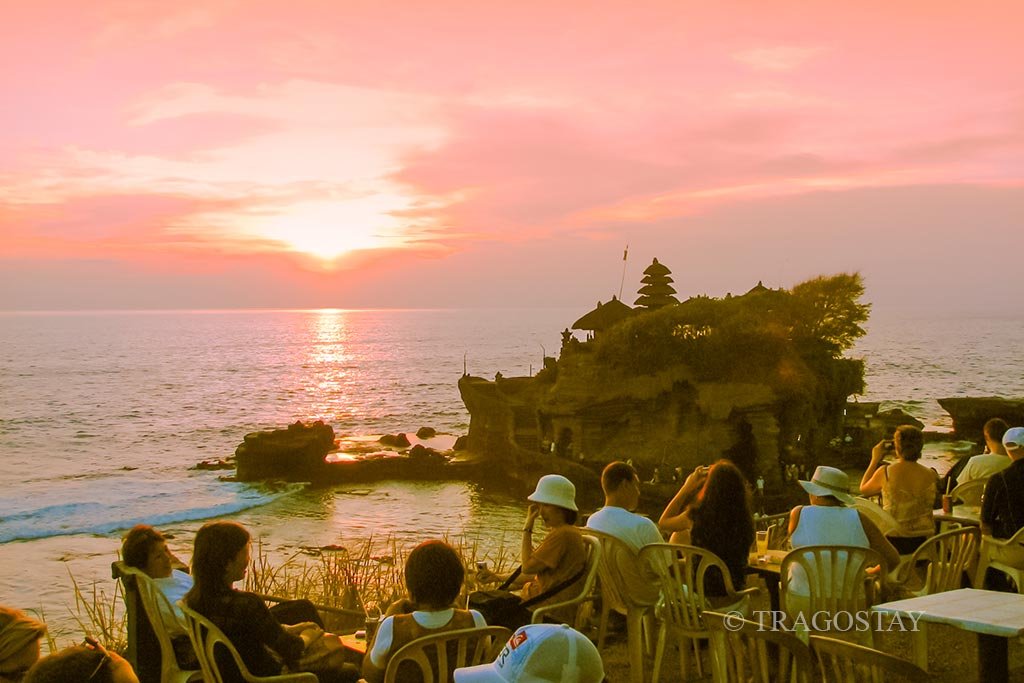
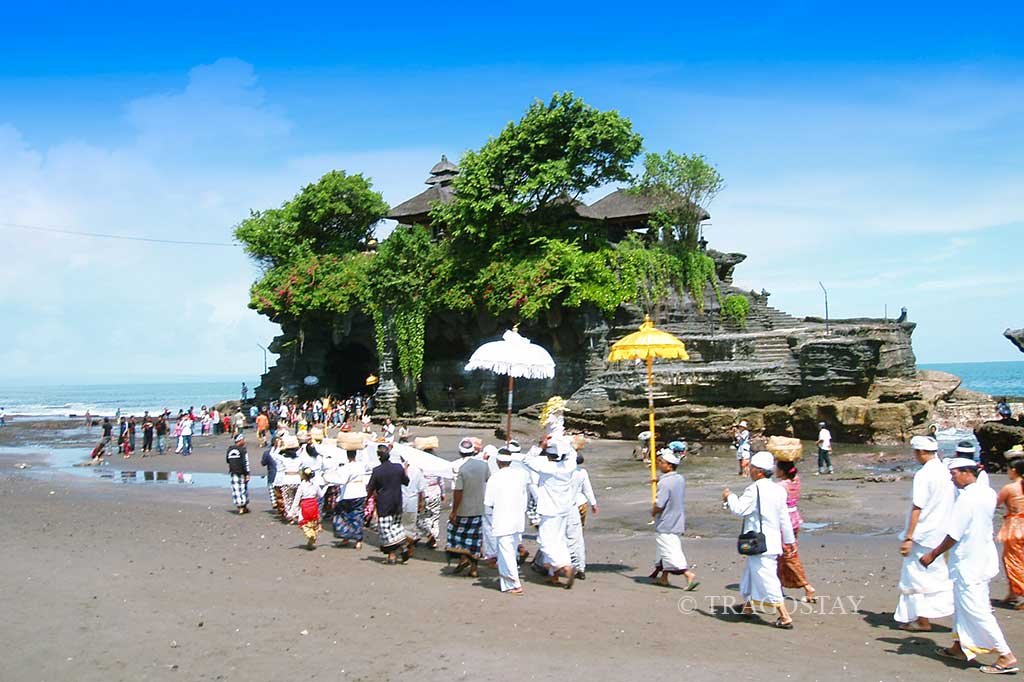
The history of Tanah Lot Temple is deeply connected to the travels of a 16th-century high priest named Dang Hyang Nirartha. Historically, Nirartha traveled from the Kingdom of Majapahit in Java to Bali to spread the teachings of Hinduism. During his journey along the southern coast, he spotted the beautiful rock islet and decided to spend the night there. He felt a strong divine presence and instructed the local villagers to build a shrine on that exact spot. Consequently, the temple became a center for honoring the guardian spirits of the sea.
During your visit, you may hear the intriguing legend regarding the “Sacred Snakes” of Tanah Lot. According to local belief, Nirartha moved his sash into the sea, where it transformed into a group of venomous sea snakes to protect the temple from evil forces. These snakes are still believed to live in the caves at the base of the rock today.
Furthermore, there is a natural freshwater spring that flows from the middle of the salty ocean at the base of the temple. The locals consider this water to be holy and use it for purification rituals. Because of these spiritual elements, the temple remains a highly active place of worship for the Balinese people. Moreover, the government underwent a major restoration project in the 1980s to save the rock from erosion. Therefore, the temple remains standing today as a testament to both ancient devotion and modern engineering.
Visitors often want to plan their schedule carefully to experience the most iconic moments at this coastal site. Fortunately, Tanah Lot offers several diverse activities.
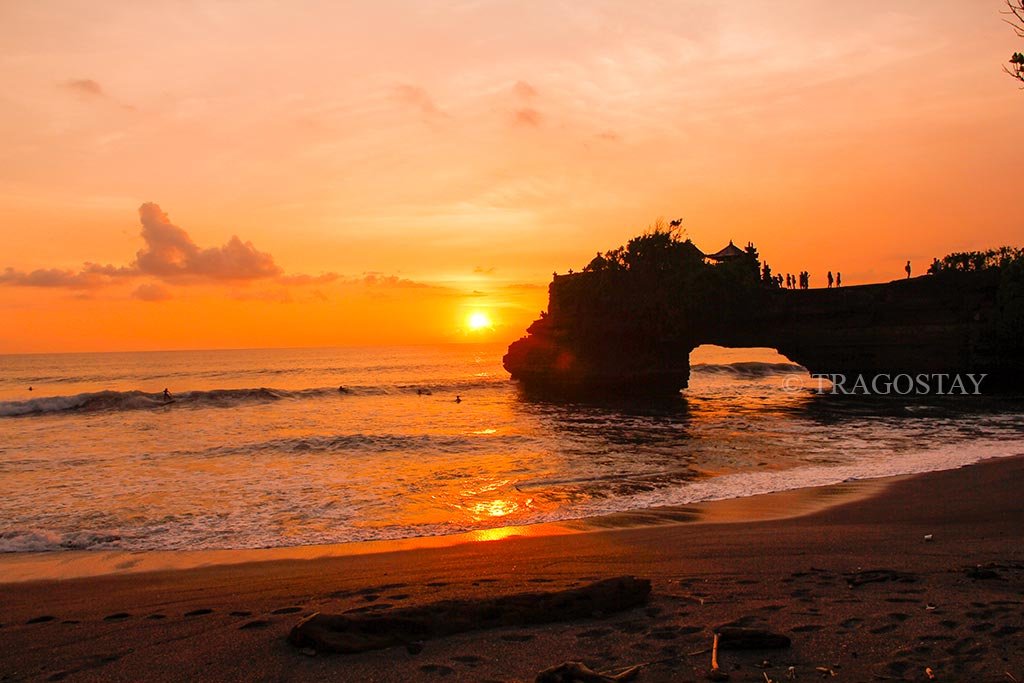
Witnessing the sunset at Tanah Lot is undoubtedly the most essential activity for any visitor. As the sun dips toward the horizon, the sky transforms into a canvas of orange, purple, and deep red. First, you should find a spot on the northern cliffs about an hour before the actual sunset. After that, you can watch the temple silhouette become a dark shadow against the glowing sky. Although it can be crowded, the sheer beauty of the moment creates a shared sense of wonder among all spectators.
Exploring the base of the rock during low tide allows you to participate in unique spiritual traditions. You can visit the holy water fountain where priests will give you a traditional blessing with rice on your forehead. Additionally, you can see the “Sacred Snake” cave where local guardians look after the striped sea snakes. You can observe these creatures from a safe distance as they rest in the crevices of the rock. Furthermore, walking along the beach during low tide reveals hidden coves and interesting rock formations that are usually underwater.
The management of Tanah Lot has developed an extensive array of public facilities to ensure a comfortable visit for international guests. You will find that the infrastructure is among the best in Bali.
First, the site features a massive parking complex that can handle hundreds of tour buses and private cars. Near the ticket office, there are multiple clean public toilets and designated smoking areas. Furthermore, the path to the temple is paved and easy to navigate, though it does involve some walking. If you feel hungry, there are many restaurants overlooking the ocean that serve both Indonesian and Western cuisine. These establishments provide the perfect place to sit and relax while waiting for the sun to set.
Additionally, the area includes a large art market where you can buy high-quality souvenirs, clothing, and local snacks. The facility also employs many security guards and lifeguards to monitor the safety of tourists near the dangerous waves. Therefore, you can focus on enjoying the scenery while knowing that the logistics are well-managed.
Planning your trip to Tanah Lot requires understanding the tide charts and the typical weather patterns of the Tabanan region. Generally, the site is open daily from 7:00 AM to 7:00 PM.
Arriving around 4:00 PM is the most popular choice because it gives you enough time to explore before the sunset. During this time, you can visit the various shrines and the art market without rushing. Additionally, visiting on a clear day in the dry season (May to September) guarantees the most spectacular sunset views. If you prefer to avoid the massive evening crowds, you can visit early in the morning for a peaceful experience.
Reaching Tanah Lot is a straightforward journey from the major tourist centers of Southern Bali. If you are staying in Canggu, the drive takes only about 20 to 30 minutes through beautiful rice fields. From the Seminyak or Kuta areas, expect a journey of 45 minutes to one hour depending on the afternoon traffic. Most travelers choose to hire a private driver through Tragostay to avoid the stress of navigating busy intersections. This option allows you to stay until after dark without worrying about finding a ride home. Alternatively, renting a scooter is a common choice for those who want to explore the surrounding beaches at their own pace. Regardless of your transport method, the road to the temple is well-maintained and clearly marked with signs.
Log in
Don't have an account? Register
Please enter your username or email address. You will receive a link to create a new password via email.
Register with your email
Do you already have an account? Log In
Log in
Don't have an account? Register
Please enter your username or email address. You will receive a link to create a new password via email.
Register with your email
Do you already have an account? Log In