

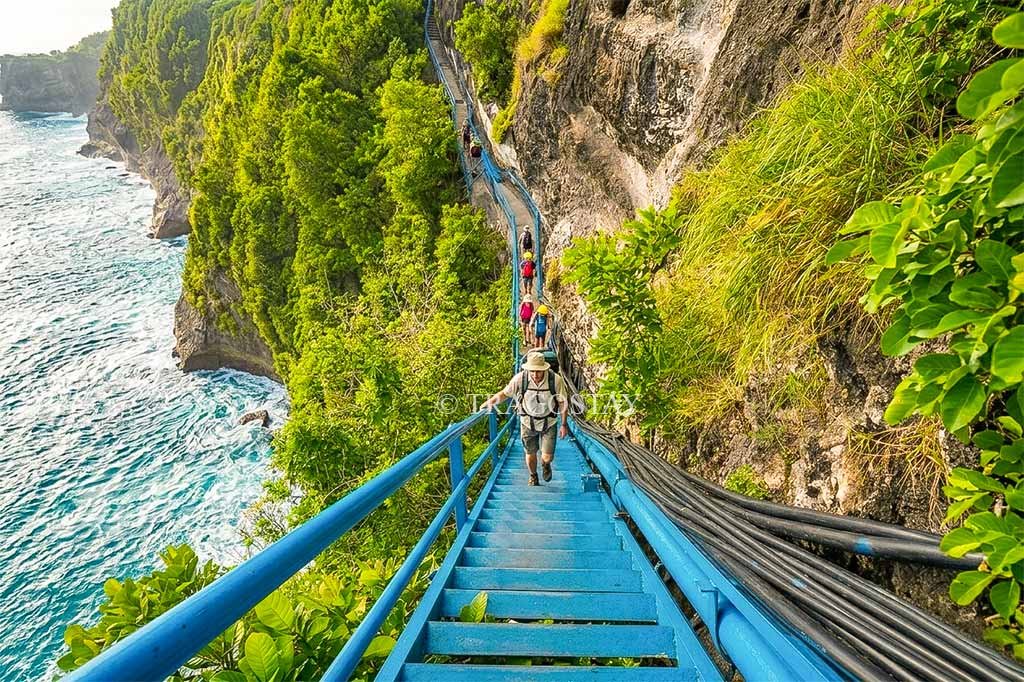
Peguyangan Waterfall (Nusa Penida) stands as one of the most adventurous and culturally significant Bali Tourist Attractions on the southern coast. This location does not feature a traditional vertical drop of water falling into a jungle pool. Instead, it offers a series of natural springs that flow directly into the Indian Ocean from the side of a massive limestone cliff. Most travelers recognize this site instantly because of the bright blue stairs that hug the vertical rock face. Consequently, thousands of thrill-seekers and pilgrims visit this southwestern point to experience the unique blend of adrenaline and spirituality. You will find spectacular ocean views clashing against the sacred atmosphere of an ancient water temple. This guide provides everything you need to know about visiting this breathtaking cliffside destination.
History reveals that Peguyangan Waterfall has served as a sacred pilgrimage site for Balinese Hindus for centuries. Local villagers originally discovered the freshwater springs flowing through the limestone crevices near the base of the cliff. They believed the water possessed healing properties and spiritual purity, leading to the construction of a small temple. Traditionally, locals had to climb down the dangerous cliffside using only bamboo ladders and carved limestone footholds. However, the government installed the famous blue steel staircase in recent years to provide safer access for both locals and tourists.
The installation of these stairs transformed a remote religious site into a global travel sensation almost overnight. Between 2017 and 2018, social media users shared stunning photos of the blue railing against the backdrop of the deep blue ocean. Suddenly, the “Blue Stairs of Nusa Penida” became a mandatory stop for international explorers. Before this digital boom, only the most devout worshippers visited the rugged terrain for purification ceremonies. Now, the area supports a growing tourism ecosystem that respects the spiritual heritage of the site. Despite the influx of visitors, the natural springs and the holy temple remain deeply respected and protected by the local community.
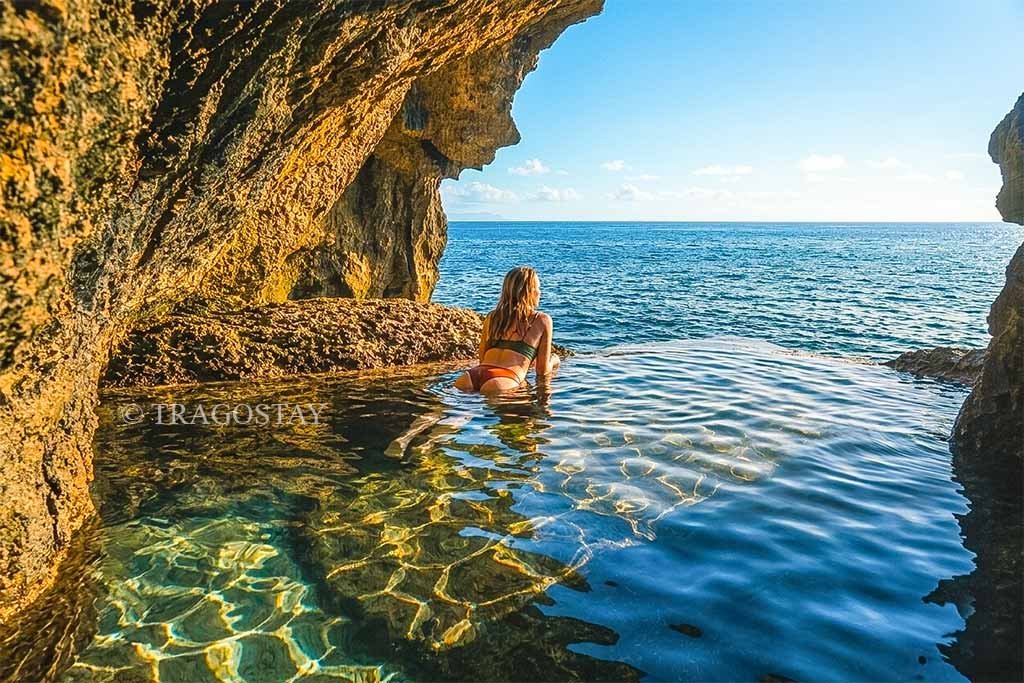

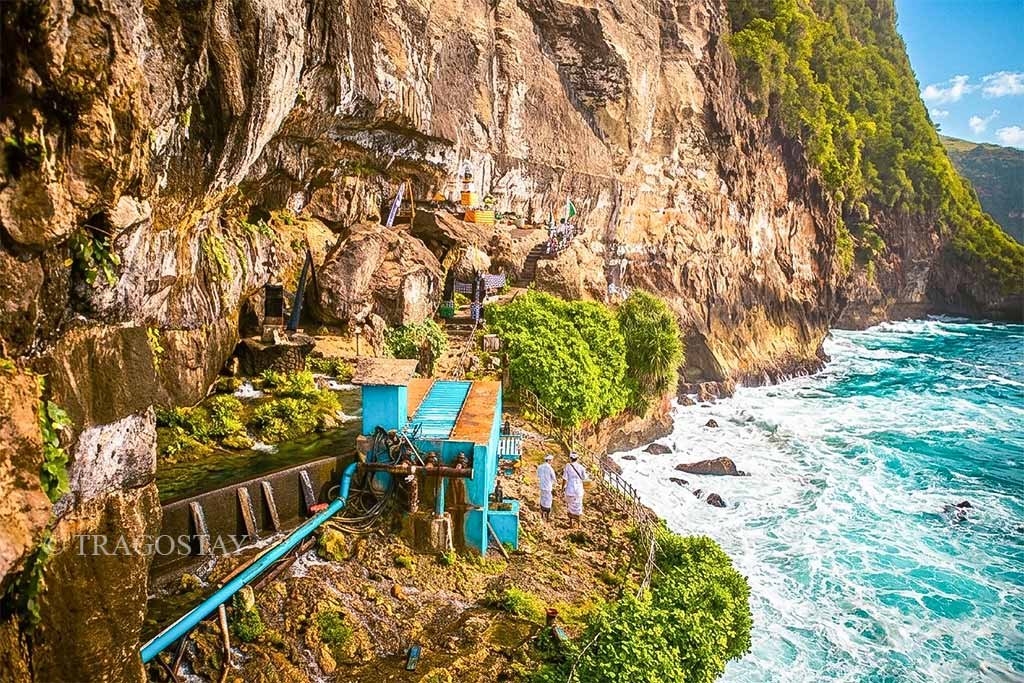
Peguyangan Waterfall serves several vital functions beyond being a simple photography spot for adventurous travelers. Primarily, it acts as a critical freshwater source for the southern part of Nusa Penida island. These ancient limestone springs provide clean water that the local government pumps up to the villages above. Furthermore, the site serves as a vital center for “Melukat,” which is a traditional Balinese Hindu purification ritual.
If you look at the bottom of the stairs, you will see a series of small spouts and pools used for these ceremonies. Therefore, the waterfall functions as a living temple where nature and religion coexist in perfect harmony. From an economic perspective, the site provides essential jobs for the residents of the nearby Batukandik village. They work as parking attendants, temple guardians, and small shop owners at the cliff top. Thus, Peguyangan Waterfall is the spiritual and economic heartbeat of the southern regency.
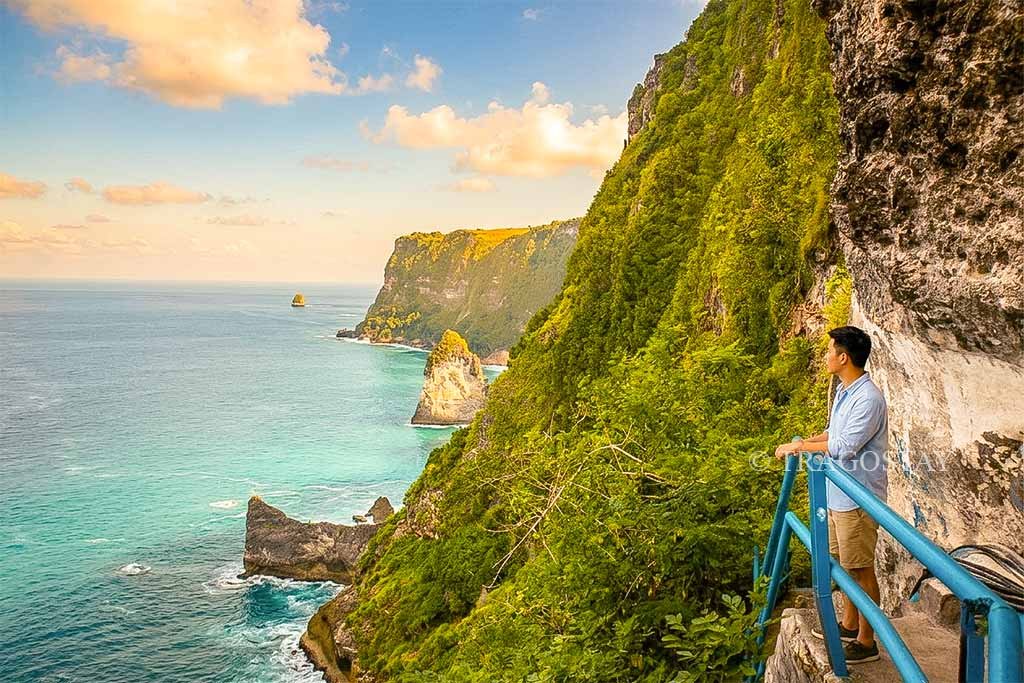
You definitely must visit Peguyangan Waterfall at least once to experience a different side of the island. First, the visual scale of the blue staircase clinging to the cliff is much more dramatic than any photo can capture. Standing on the narrow steps feels like walking on the edge of the world with nothing but the ocean below. Second, the location offers a sense of authentic Balinese culture that is harder to find at commercial beaches.
While many Bali Tourist Attractions focus solely on leisure, this site requires a physical and spiritual commitment. You will experience a deep sense of accomplishment as you navigate the 460 steep steps down the cliffside. Additionally, reaching the bottom allows you to witness the raw power of the Indian Ocean swells hitting the rocks. It is a true test of physical stamina and a rewarding journey for the soul. Ultimately, your Nusa Penida trip remains incomplete without facing the challenge of these iconic blue stairs.
Although the terrain is extremely rugged, the local community has organized several facilities to accommodate visitors. You will find a large designated parking area at the top of the cliff for scooters and cars. Small local stalls, known as warungs, are located right at the entrance of the path. ini vendors sell cold drinks, fresh young coconuts, and classic Indonesian snacks to help you recover from the climb.
Furthermore, there are basic restroom and changing facilities available near the parking zone. Since this is a sacred temple site, you must wear a sarong to enter the area. You can rent a traditional sarong at the entrance for a very small fee if you do not have your own. The authorities have also maintained the steel staircase regularly to ensure the safety of all climbers. You can also find several small shaded areas at the top to rest while enjoying the cool sea breeze. Most facilities are simple, but they provide exactly what an adventurer needs.
Conquer the 460 Blue Steps
The main activity is the descent and ascent of the famous blue steel staircase. You should take your time and hold onto the railings while admiring the vertical drop of the limestone cliffs. Each turn of the staircase offers a new and more dramatic perspective of the coastline.
Experience a Purification Ritual
If you reach the bottom, you can participate in or observe the holy purification ceremony. You should respect the local worshippers as they move through the different water spouts. The sound of the falling spring water mixed with the crashing ocean waves creates a meditative atmosphere.
Photograph the Coastal Panorama
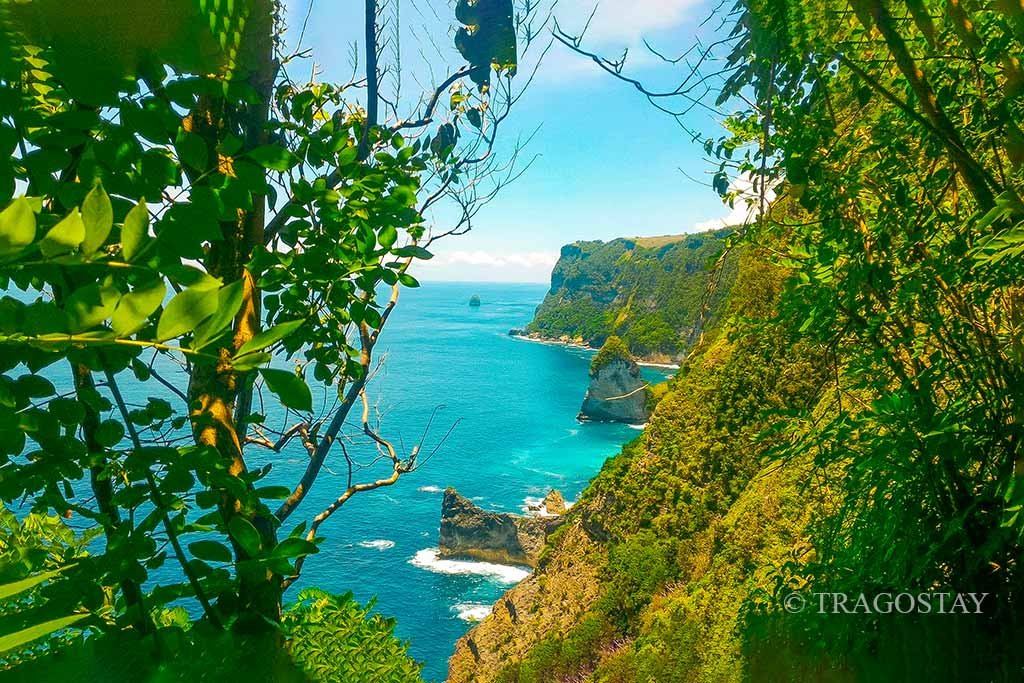
Peguyangan offers some of the most unique photography angles in the Indonesian archipelago. You should capture the contrast between the industrial blue of the stairs and the natural green of the cliffs. The view of the turquoise water from the middle of the staircase is perfect for wide-angle shots.
Dip in the Natural Rock Pools
At the base of the cliff, there are small natural pools where the spring water collects before entering the sea. You can sit in these shallow pools and feel the refreshing freshwater on your skin. However, you must always be careful of the large ocean waves that occasionally splash over the rock barrier.
Timing is the most critical factor when planning your visit to Peguyangan Waterfall. You should ideally arrive early in the morning between 7:00 AM and 9:00 AM. During these hours, the sun is not yet directly hitting the cliff, making the climb much more comfortable. Alternatively, visiting in the late afternoon allows you to avoid the midday heat and enjoy a softer light.
Regarding logistics, you must wear shoes with excellent grip because the steel steps can become slippery from the sea spray. Furthermore, you should bring at least one liter of water for the return climb, as the ascent is very demanding. The drive to the south coast takes about 45 to 60 minutes from the main harbor through winding village roads. Since this is a religious site, you must always maintain a respectful attitude and follow the local dress code. Finally, ensure your camera has a secure strap because the wind on the cliffside can be quite strong.
Yes, the climb is physically demanding. There are about 460 steep steps, and the return journey upwards requires a good level of fitness.
It might be challenging if you have severe vertigo. The stairs are narrow and attached directly to the side of a vertical cliff with a clear view of the drop.
Yes, there is a small fee for parking and temple maintenance. Usually, it costs around IDR 10,000 to 15,000, including the sarong rental.
Not in the traditional sense. The “waterfall” is a series of spouts and small flows rather than a large plunging curtain of water.
Most people spend about 1.5 to 2 hours here. This includes the time to climb down, explore the temple, and climb back up.
You should wear comfortable walking shoes and bring a sarong. If you do not have a sarong, you can easily rent one at the parking area.
Log in
Don't have an account? Register
Please enter your username or email address. You will receive a link to create a new password via email.
Register with your email
Do you already have an account? Log In
Log in
Don't have an account? Register
Please enter your username or email address. You will receive a link to create a new password via email.
Register with your email
Do you already have an account? Log In