

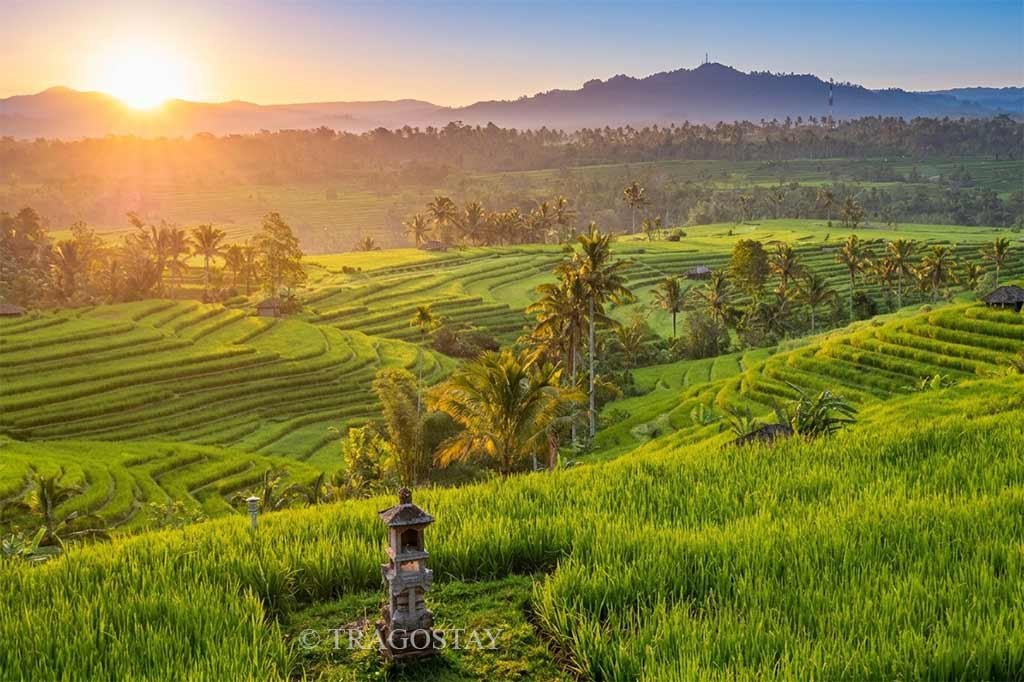
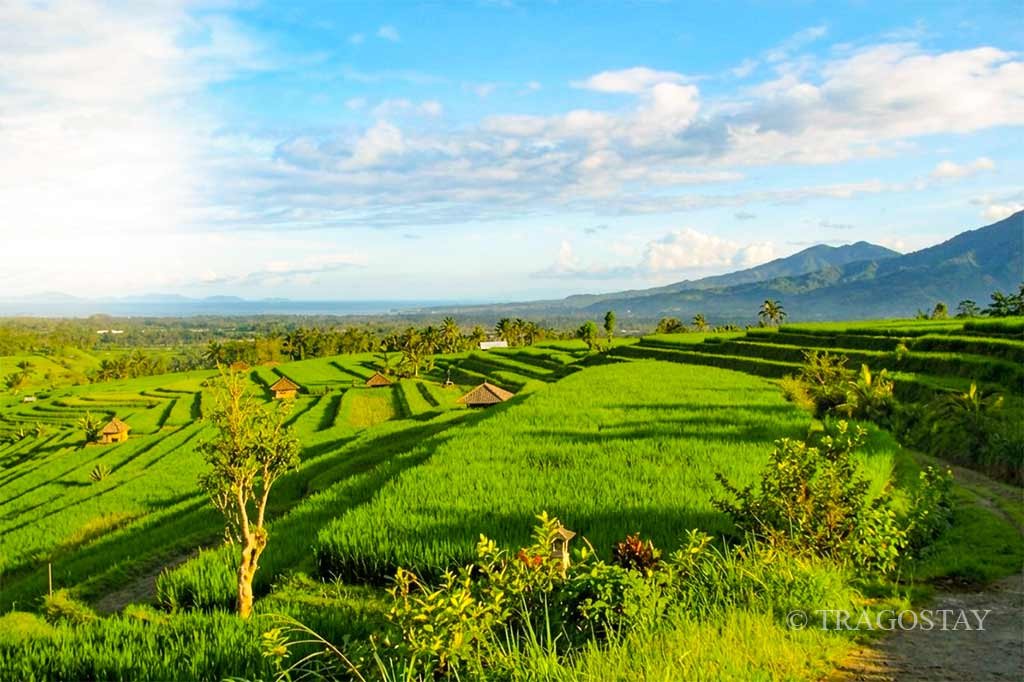
Jatiluwih Rice Terraces represent the most spectacular and expansive example of traditional Balinese agriculture found anywhere on the island. As a prestigious inclusion on the Bali Tourist Attractions list, this site offers a breathtaking vista of emerald-green fields that cascade down the slopes of Mount Batukaru. Located in the Tabanan Regency, the area covers over 600 hectares of meticulously maintained paddies. Consequently, the United Nations Educational, Scientific and Cultural Organization (UNESCO) recognized this landscape as a World Heritage site in 2012.
Visitors will find that the scale of Jatiluwih is far more vast and peaceful than the more crowded terraces in Ubud. Moreover, the cool mountain air provides a refreshing environment for outdoor exploration throughout the day. While you stand at the viewpoint, the sheer harmony between human effort and natural beauty will surely leave you in awe. Indeed, this agricultural marvel serves as the “emerald jewel” of Bali’s cultural landscape.
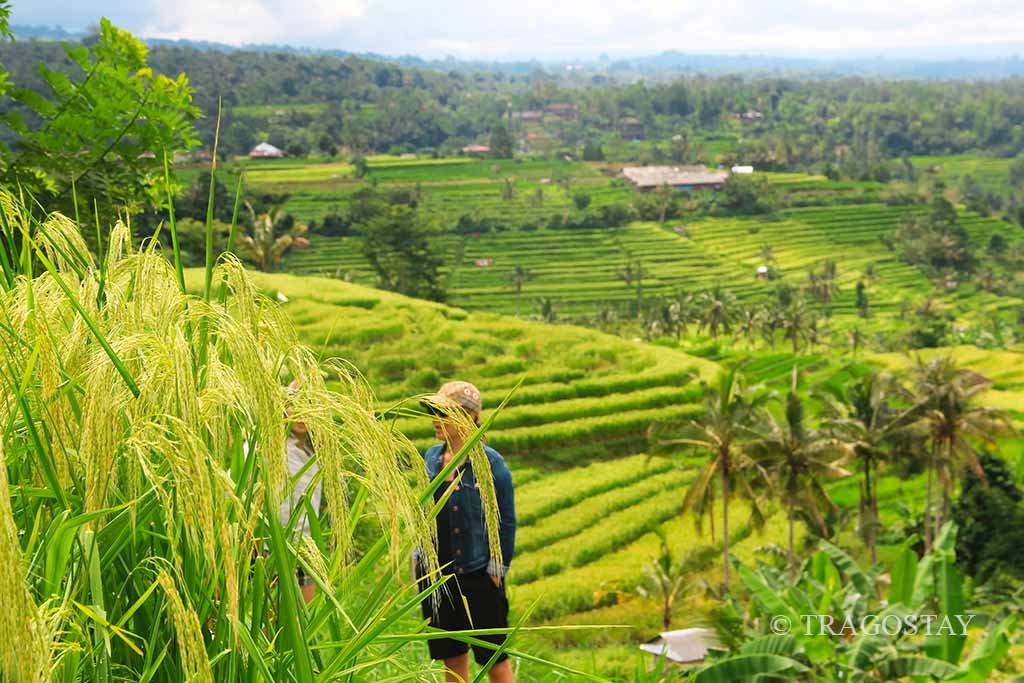
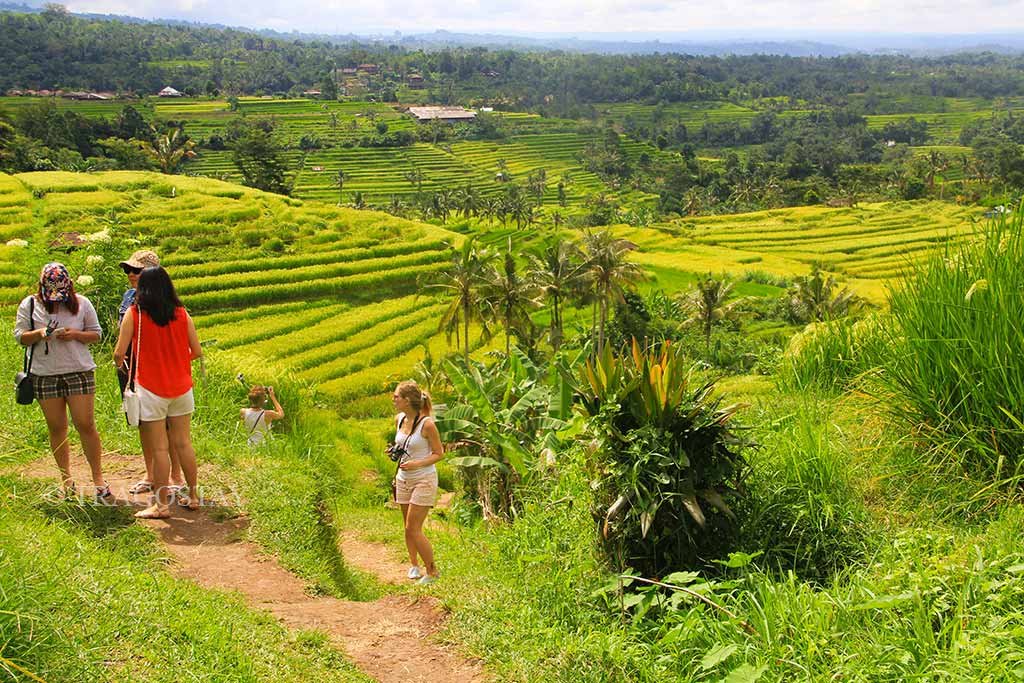
Walking along the ridge overlooking the valley feels like stepping into a living postcard of ancient Indonesia. The terraces stretch as far as the eye can see, creating a rhythmic pattern of curves that follow the natural contour of the land. Nevertheless, the true charm of Jatiluwih lies in its authenticity as a working farm rather than a mere tourist photo spot. You will quickly notice that the farmers still use traditional methods to plant and harvest their unique red rice. Because the area is so large, you can easily find a secluded path where the only sound is the rustling of rice stalks and the flowing water.
Furthermore, the massive peaks of the central mountain range often peek through the clouds in the background. Therefore, your visit becomes a deep immersion into the quiet, rural soul of Bali.
Exploring this vast heritage site offers a profound look into the engineering brilliance of the Balinese people. The name “Jatiluwih” originates from two Balinese words: Jati, meaning “real,” and Luwih, meaning “beautiful” or “excellent.” For many generations, this region has functioned as the rice bowl of Bali, providing high-quality grain for the entire island. Although Bali features several famous rice terraces, none match the sheer geological scale of this mountain-fed valley. The terraces are carved into the earth with such precision that they allow water to flow perfectly from the highest peaks to the lowest plains.
Interestingly, the entire landscape is managed by local farming cooperatives that prioritize sustainability over mass tourism. Most visitors spend their time trekking through the various color-coded paths that wind through the fields. Furthermore, the area remains free from large-scale commercial developments, preserving its rustic and traditional atmosphere.
Since the site is located at an altitude of 700 meters, the climate is significantly cooler than the coastal regions of Kuta or Seminyak. This makes it an ideal destination for those who enjoy physical activity without the intensity of the tropical heat. Additionally, the local community takes great pride in maintaining the cleanliness and integrity of their land. Thus, every visitor is expected to respect the environment by staying on the designated paths.
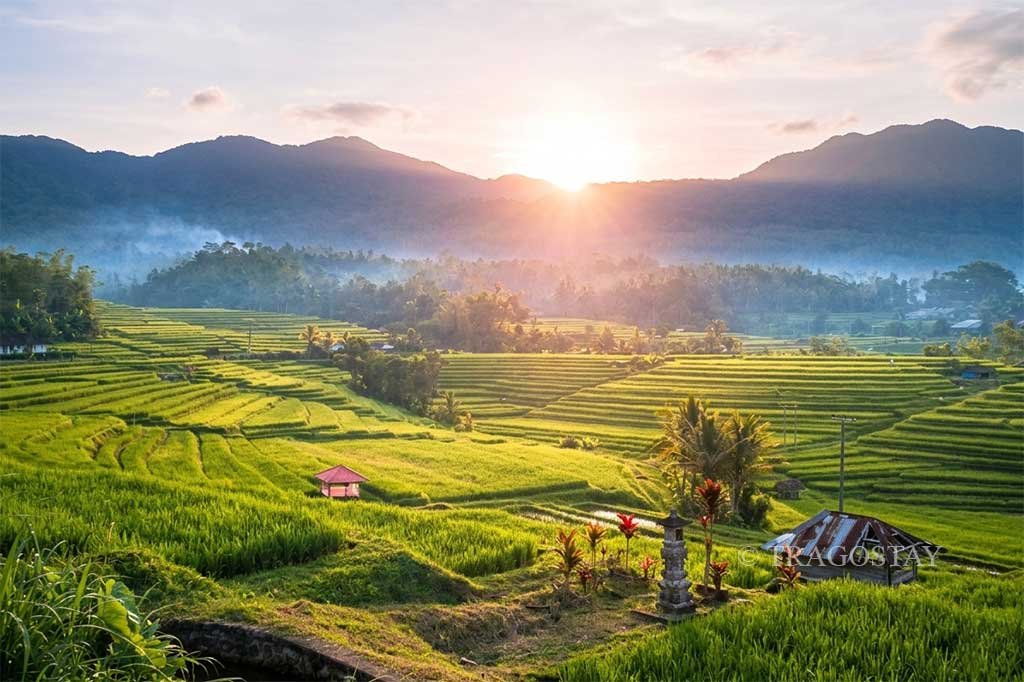
The history of Jatiluwih Rice Terraces is inextricably linked to the Subak irrigation system, which has existed since the 9th century. Historically, this system is not just about moving water; it is a manifestation of the “Tri Hita Karana” philosophy. This ancient Balinese concept emphasizes the harmony between humans, nature, and the spiritual realm. Consequently, the water temples located at the top of the mountains govern the distribution of water to the fields below. UNESCO awarded the site World Heritage status because it perfectly demonstrates how a spiritual belief system can create a sustainable and productive ecosystem.
During your trek, you will see small shrines placed at every intersection where water divides. These shrines are dedicated to Dewi Sri, the goddess of rice and fertility, whom farmers honor before every planting season. Furthermore, the Subak system ensures that every farmer receives a fair share of water, regardless of the location of their field. Because this system relies on community cooperation, it has protected Bali’s landscape from being converted into industrial or residential zones.
Moreover, the red rice grown here is a heritage variety that is rarely found in other parts of the world. Therefore, the preservation of Jatiluwih is crucial for both the cultural identity and the food security of the island.
The local community has improved the public facilities to ensure that visitors have a comfortable experience while exploring the heritage site. You will find that the amenities are integrated thoughtfully into the landscape through the following list:
Visitors often want to know how to best explore such a massive area without getting lost or overwhelmed. Fortunately, the village has created a very organized system for outdoor activities.
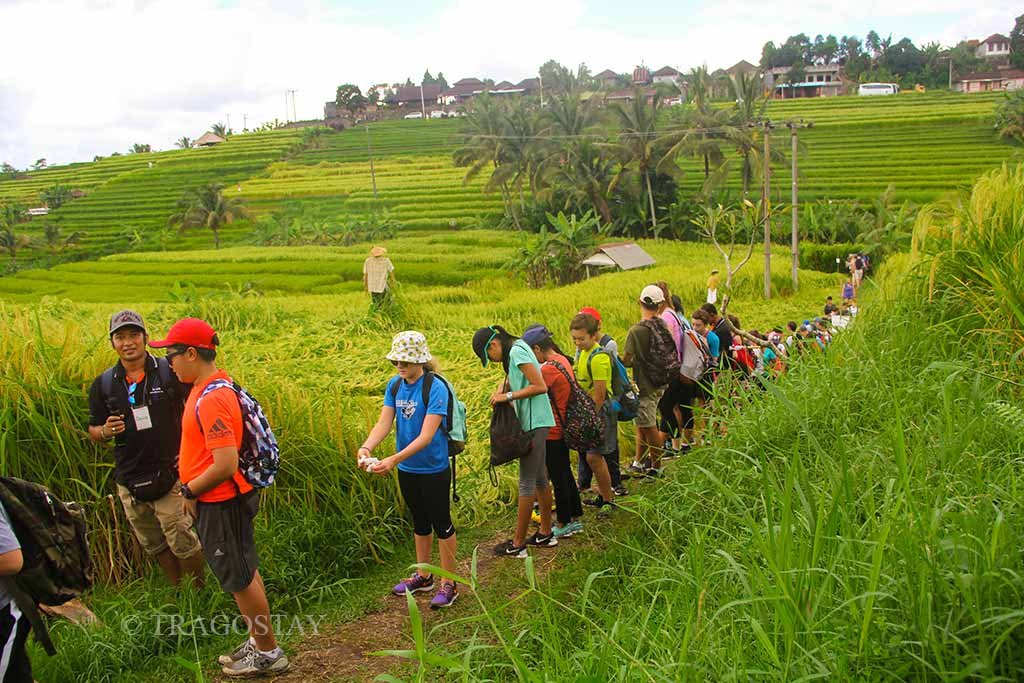
Embarking on a trekking adventure is undoubtedly the best way to experience the majesty of Jatiluwih Rice Terraces. The management has created several color-coded routes ranging from the “Short Track” (45 minutes) to the “Extra Long Track” (4 hours). First, you choose a path based on your fitness level and available time. After that, you follow the well-marked concrete or dirt paths that lead you into the heart of the paddies. Although the long track is more demanding, it offers the most incredible panoramas and leads you to hidden waterfalls. Furthermore, you will encounter local farmers who are usually happy to offer a friendly smile or a wave.
Renting a bicycle is another fantastic way to see more of the landscape in a shorter amount of time. Several local operators offer guided e-bike or mountain bike tours that take you through the backroads of the village. Additionally, you can observe the intricate canal systems and small dams that make up the Subak network. You can feel the wind in your face as you glide down the gentle slopes of the valley. Furthermore, cycling allows you to reach the nearby Batukaru Temple more easily than walking would.
Planning your visit to Jatiluwih requires an understanding of the rice planting cycle to see the scenery at its most vibrant. Generally, the site is open daily from 8:00 AM to 6:00 PM.
Arriving early in the morning, around 8:00 AM or 9:00 AM, is highly recommended to avoid the midday sun and the afternoon clouds. During these hours, the visibility of Mount Batukaru is usually at its best, and the light is perfect for high-contrast photography. Additionally, the best months to visit are between February and April for lush green views, or June to July for the golden harvest season. If you visit in August, be aware that some fields might be empty as the farmers prepare for the next cycle.
Reaching Jatiluwih Rice Terraces involves a scenic drive through the heart of the Tabanan countryside. If you are staying in Ubud, the drive takes approximately 1.5 hours through winding village roads. From the coastal areas like Canggu or Seminyak, expect a journey of about 1 hour and 45 minutes. Most travelers choose to hire a private driver through Tragostay to navigate the narrow roads and steep inclines safely.
This option allows you to enjoy the views of the coconut plantations and traditional villages along the way. Alternatively, renting a scooter is possible for experienced riders who want the freedom to stop at various hidden viewpoints. Regardless of your choice, the road is well-paved, though it requires careful driving due to the many sharp turns.
Log in
Don't have an account? Register
Please enter your username or email address. You will receive a link to create a new password via email.
Register with your email
Do you already have an account? Log In
Log in
Don't have an account? Register
Please enter your username or email address. You will receive a link to create a new password via email.
Register with your email
Do you already have an account? Log In